
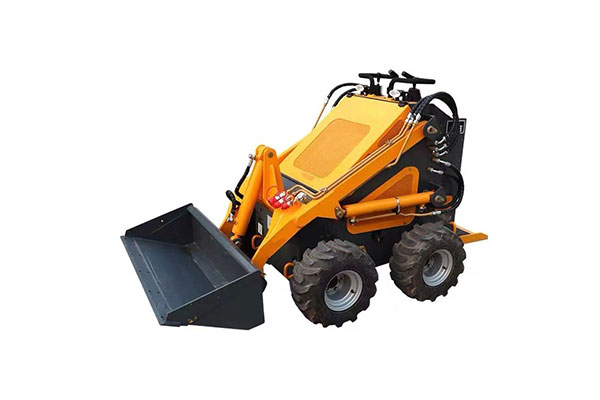
How to Evaluate Electric Skid Loader Performance and Lifting Capacity
Choosing the right skid loader requires more than comparing purchase prices or battery specifications. Buyers must understand how the machine performs under real working conditions, how much weight it can safely handle, and whether its power system can support daily workloads. These factors directly influence productivity, operating costs, and workplace safety.
An Electric Skid Loader combines battery-powered operation with the compact design and versatility needed for construction, landscaping, agriculture, and material handling. To evaluate a model effectively, buyers should examine its rated operating capacity, lifting geometry, motor performance, hydraulic specifications, battery runtime, stability, and compatibility with attachments.
1. Understand the Main Performance Specifications
Before comparing electric skid loaders, review the manufacturer’s technical specifications. These figures provide an initial indication of what the machine can handle and where it is best suited for use.
Important specifications include:
- Rated operating capacity (ROC): The manufacturer’s specified load capacity under defined operating conditions.
- Tipping load: A measurement used to assess the load at which the machine approaches a tipping condition under a specified test procedure.
- Maximum lift height: The maximum height the lifting system can reach.
- Travel speed: The speed at which the machine can move across suitable surfaces.
- Hydraulic flow and pressure: Measurements that help determine compatibility with hydraulic attachments.
- Battery capacity: The amount of energy the battery can store, commonly measured in kilowatt-hours (kWh).
- Operating weight: The machine’s weight in its specified configuration, which affects transportation, ground pressure, and stability.
Specifications should always be interpreted according to the manufacturer’s definitions. Two machines may list similar figures but use different configurations or testing conditions, making direct comparison difficult.
2. Evaluate Rated Operating Capacity
Rated operating capacity is one of the most important measurements when assessing lifting performance. It indicates the load the machine is designed to handle within specified operating limits.
For example, a construction company that regularly moves bags of building materials, gravel, or pallets needs a loader with enough rated capacity to manage those loads safely. A landscaping business handling mulch and lighter materials may have different capacity requirements.
When evaluating rated operating capacity, consider:
- The typical weight of materials handled.
- The frequency of lifting and unloading.
- The height at which loads must be placed.
- The type and weight of the attachment.
- The stability of the ground and the machine’s operating configuration.
Do not choose a loader based solely on the heaviest load you expect to lift occasionally. Evaluate the machine against normal daily tasks while allowing for the manufacturer’s required safety limits.
3. Understand Rated Capacity vs. Tipping Load
Rated operating capacity and tipping load are related, but they are not interchangeable.
Tipping load generally refers to the load associated with a defined tipping condition during testing. Rated operating capacity is a more conservative operating limit established according to the applicable machine design and rating method.
A machine may have a much higher tipping-load figure than its rated operating capacity. That does not mean an operator can safely lift loads up to the tipping threshold during routine work.
When comparing specifications, check how each figure was measured and whether it follows the same standard. Always use the manufacturer’s rated operating capacity and operating instructions to determine permissible loads.
4. Examine Lifting Height and Reach
Lifting capacity is only one part of a machine’s usefulness. The loader must also be able to place materials at the required height and reach.
Consider the following questions:
- Does the machine lift high enough to load the intended truck or container?
- Can it reach the required unloading point without unsafe positioning?
- How does its rated capacity change as the lifting arms rise?
- Is the machine stable when handling loads at different heights?
- Does the attachment affect the available lifting range?
A loader designed for ground-level material movement may not be the best choice for tasks that require frequent loading at greater heights.
Review the manufacturer’s lift geometry and load information instead of assuming that maximum lift height means maximum lifting capacity at every point in the lifting cycle.
5. Assess Motor Power and Driving Performance
Electric skid loaders use electric motors to provide drive power and operate machine systems. Their performance depends on the motor design, battery output, control system, machine weight, and intended workload.
When comparing models, evaluate how well the machine can accelerate, turn, climb suitable slopes, and move materials over the surfaces where it will operate.
Performance considerations include:
- Available drive power.
- Travel speed and control responsiveness.
- Traction on the intended surface.
- Ability to maneuver in confined spaces.
- Performance while carrying rated loads.
- Behavior during repeated starts, stops, and turns.
A machine that performs well on a smooth floor may behave differently on loose soil, gravel, or uneven terrain. If possible, test the loader in conditions similar to those of the intended job.
6. Evaluate Hydraulic Performance
Hydraulic performance determines how effectively a loader can lift materials and operate compatible hydraulic attachments. It is especially important for machines used with augers, trenchers, grapples, sweepers, or other powered tools.
Two major specifications are hydraulic flow rate and operating pressure. Flow is commonly expressed in liters per minute (L/min), while pressure may be expressed in bar or megapascals (MPa).
Higher values do not automatically mean better performance. The correct hydraulic specifications depend on the attachment’s requirements and the machine’s overall design.
Before purchasing, confirm that:
- The hydraulic system meets the attachment manufacturer’s requirements.
- The loader can provide the required flow and pressure.
- The attachment’s weight is within the machine’s limits.
- The hydraulic system can handle the intended duty cycle.
- The manufacturer permits the planned attachment and operating method.
An incompatible attachment can reduce productivity and may cause excessive heat, poor performance, or component damage.
7. Measure Battery Performance Under Real Working Conditions
Battery performance is a major factor in evaluating electric skid loaders. A machine may have sufficient lifting capacity but still be unsuitable for a business if it cannot complete the required work between charging periods.
Battery capacity indicates stored energy, but actual runtime depends on more than the battery’s size. Heavy loads, frequent lifting, continuous hydraulic operation, travel conditions, temperature, and charging practices can all influence energy consumption.
To evaluate battery performance, ask the supplier for information about:
- Battery capacity and chemistry.
- Expected operating time under representative workloads.
- Charging time and compatible charging equipment.
- Battery temperature management.
- Battery warranty and service requirements.
- Performance under different ambient temperatures.
If possible, request a demonstration using tasks that resemble your daily work. Realistic testing is more useful than relying entirely on general runtime estimates.
8. Consider the Effect of Attachments on Lifting Capacity
Attachments influence how much material a skid loader can safely handle. A heavy bucket, grapple, or specialized tool adds weight to the machine’s working configuration and can change the load’s position relative to the lifting arms.
For example, a pallet fork attachment may be suitable for moving palletized materials, while a grapple may be better for irregular debris. However, each attachment has different weight, reach, and handling characteristics.
Before selecting an attachment, verify:
- Its weight and mounting compatibility.
- The loader’s rated operating capacity with the relevant configuration.
- Any restrictions on lift height or load position.
- Hydraulic flow and pressure requirements.
- The manufacturer’s operating instructions.
Never assume that a loader’s published maximum capacity applies unchanged to every attachment or working condition.
9. Evaluate Stability and Ground Conditions
Stability is essential for safe lifting and material handling. The machine’s balance can change depending on load weight, attachment configuration, lift height, travel direction, and ground conditions.
Uneven terrain, soft soil, slopes, and slippery surfaces can increase the risk of loss of control or tipping. Even on level ground, sudden turns or abrupt movements with a raised load can create hazards.
When evaluating a loader, consider its operating weight, wheelbase or track configuration, center of gravity, tire or track design, and manufacturer-approved operating limits.
During operation, keep loads low while traveling, avoid sudden movements, and follow the specified procedures for working on slopes. Operators should never exceed rated capacity in an attempt to improve productivity.
10. Compare Electric Skid Loader Performance with Diesel Models
Electric and diesel skid loaders can perform similar tasks, but their operating characteristics differ. The better option depends on the job requirements, work schedule, charging access, and local operating conditions.
| Performance factor | Electric skid loader | Diesel skid loader |
|---|---|---|
| Energy source | Rechargeable battery | Diesel fuel |
| Local exhaust | No tailpipe exhaust during operation | Produces exhaust emissions |
| Operating noise | Generally lower, depending on the machine | Generally higher due to the engine |
| Energy replenishment | Requires battery charging | Requires refueling |
| Routine servicing | Fewer engine-related service tasks | Includes engine and fuel-system maintenance |
| Work duration | Depends on battery capacity and charging plan | Can often resume work quickly after refueling |
| Indoor suitability | Can be useful where exhaust emissions are a concern | Requires careful consideration of ventilation and emissions |
For indoor construction, warehouses, and noise-sensitive sites, electric models may offer useful advantages. For remote operations or long shifts without charging access, diesel models may remain practical.
A fair comparison should consider productivity, energy costs, maintenance, downtime, and the specific demands of the application.
11. Test Performance Before Purchasing
A practical demonstration can reveal information that a specification sheet cannot fully communicate. Whenever possible, test the machine using representative materials and working conditions.
A useful evaluation should examine:
- How smoothly the loader moves and turns.
- Whether the machine handles expected loads within its rated limits.
- How effectively the lifting system operates at different heights.
- Whether the hydraulic system supports the intended attachments.
- How controls respond during routine tasks.
- Whether visibility and access are suitable for the work area.
- How much battery energy is consumed during a representative operating period.
Record the results and compare them with the supplier’s claims. Ensure the demonstration is conducted by trained personnel, using safe loads and the manufacturer’s operating procedures.
12. Calculate Productivity and Operating Costs
Performance should be assessed in terms of useful work completed, not just maximum power or lifting capacity. A loader that moves materials reliably, minimizes unnecessary travel, and completes tasks with fewer interruptions may offer better overall value.
Estimate the machine’s expected daily workload, operating hours, charging schedule, and maintenance requirements. Include electricity costs, attachment expenses, battery warranty terms, and the potential cost of downtime.
A basic comparison can use the following factors:
| Evaluation factor | Key question |
|---|---|
| Work output | How much material can the machine move per hour? |
| Load capacity | Can it handle typical loads within its rated limits? |
| Battery runtime | Can it complete the required tasks between charges? |
| Charging | Is suitable charging available when needed? |
| Maintenance | What inspections and servicing are required? |
| Attachments | Can the machine perform the required tasks with compatible tools? |
| Downtime | How quickly can the machine return to service after charging or repairs? |
Actual productivity varies with operator skill, material type, travel distance, site layout, and working conditions. Use realistic estimates rather than relying on maximum performance figures alone.
13. Common Mistakes When Evaluating Performance
Buyers can avoid costly selection errors by looking beyond headline specifications. Common mistakes include:
- Focusing only on lifting capacity: Lift height, stability, attachment weight, and load position also matter.
- Ignoring battery performance: A powerful machine may not meet the required working schedule without adequate charging access.
- Overlooking hydraulic compatibility: Attachments may perform poorly if the machine cannot provide the required flow and pressure.
- Comparing inconsistent specifications: Capacity figures must be based on comparable definitions and configurations.
- Skipping practical testing: Real-world performance may differ from estimates based on ideal conditions.
- Underestimating maintenance: Electric equipment still needs inspections, servicing, and battery care.
- Ignoring the work environment: Space restrictions, surface conditions, and operating temperatures affect performance.
A structured evaluation helps buyers select equipment that matches the job rather than paying for capabilities they do not need or choosing a machine that cannot meet their requirements.
Conclusion
Evaluating electric skid loader performance and lifting capacity involves examining several connected factors, including rated operating capacity, tipping-load information, lift height, motor performance, hydraulic specifications, battery runtime, and stability. Each specification contributes to the machine’s suitability for a particular application.
Buyers should compare models using consistent manufacturer data and, when possible, test them under representative working conditions. Attachment compatibility, charging access, service support, and total operating costs should also influence the decision.
By taking a practical approach to performance evaluation, businesses can choose an electric skid loader that handles their expected workload safely, supports productivity, and provides dependable value over its working life.


