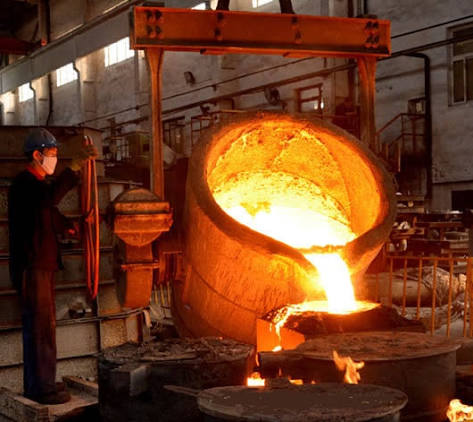
Iron casting is an important manufacturing process used to produce components for automotive systems, construction machinery, agricultural equipment, pumps, valves, and various industrial applications. Although casting can be an economical way to manufacture complex metal parts, the total production cost varies significantly depending on the component’s design, material, manufacturing method, and order quantity.
Understanding these cost factors helps industrial buyers plan their budgets, compare supplier quotations, and make informed purchasing decisions. The production price is not determined by raw material expenses alone. Pattern development, mold preparation, melting, labor, machining, inspection, and transportation can all contribute to the final cost. Working with an experienced Iron Castings Manufacturer can help buyers understand these expenses and identify practical ways to improve manufacturing efficiency.
1. Raw Material Costs
Raw materials are one of the main expenses in iron casting manufacturing. The cost of iron varies according to market conditions, material availability, transportation expenses, and the grade required for the finished component.
Common casting materials include gray iron and ductile iron. Their prices can differ because of variations in chemical composition, treatment requirements, and mechanical properties.
Manufacturers may use pig iron, steel scrap, foundry returns, and alloying elements to prepare the required molten metal. The proportions of these materials depend on the casting specification.
Material costs can also increase when a component requires specialized grades or additional alloying elements. Therefore, selecting a suitable material that meets performance requirements without unnecessary specifications can help control production expenses.
2. Component Size and Weight
<AsyncImage query=”large heavy industrial iron castings foundry machine components” aspectRatio=”16:9″ width=”100%”/>
The size and weight of a casting directly influence how much material and production capacity are required.
Larger components generally consume more molten iron and may require bigger molds, additional handling equipment, and longer cooling periods. Heavy castings can also increase transportation and storage costs.
However, component weight is not the only consideration. A relatively small part with complex internal features may require more specialized tooling and processing than a larger component with a simple shape.
Manufacturers evaluate the overall geometry, material requirements, and production method to estimate the cost accurately.
3. Design Complexity and Geometry
The complexity of a component’s design can significantly affect manufacturing expenses. Simple shapes are generally easier to mold and produce, while complicated geometries may require additional engineering work and specialized tooling.
Features that can increase production costs include:
- Thin or uneven wall sections.
- Complex internal cavities.
- Multiple openings and passages.
- Detailed surface features.
- Tight dimensional tolerances.
- Complicated core arrangements.
Complex designs may require additional cores, more advanced mold preparation, and careful control of molten metal flow.
Design optimization can sometimes reduce these requirements. For example, adjusting wall thickness or simplifying nonessential features may make a component easier to manufacture without affecting its intended function.
4. Pattern and Tooling Development
<AsyncImage query=”industrial foundry metal casting pattern tooling sand mold equipment” aspectRatio=”16:9″ width=”100%”/>
Patterns and tooling are necessary for creating the mold cavities used in casting production. Their development represents an important initial investment, particularly for custom components.
Pattern costs depend on several factors, including:
- Pattern size and complexity.
- Material used for pattern construction.
- Required dimensional accuracy.
- Number of pattern sections.
- Expected production volume.
- Maintenance and replacement requirements.
Wooden, plastic, and metal patterns may be used depending on the application and expected production runs.
For small orders, tooling expenses can represent a relatively large share of the total project cost. For larger production quantities, the initial tooling investment can be distributed across more components, reducing the tooling cost per unit.
5. Mold Making and Core Preparation
The mold is responsible for forming the casting’s external geometry, while cores create internal cavities and passages when required.
Mold preparation costs depend on the molding method, sand quality, mold dimensions, labor requirements, and production complexity.
Components with simple shapes may need relatively straightforward molds. More complicated designs can require multiple cores, additional mold sections, and precise positioning procedures.
Core preparation can increase production time because each core must be manufactured, inspected, and placed correctly.
The condition and quality of the mold also influence the likelihood of casting defects. Poor mold preparation can lead to additional production costs through rejected components and rework.
6. Manufacturing Process Selection
Different iron casting methods involve different equipment, production requirements, and cost structures.
Sand casting is widely used for iron components because it supports a broad range of shapes and sizes. It is often suitable for custom components and low-to-medium production volumes.
Other specialized casting methods may be selected when specific surface finishes, dimensional requirements, or production conditions justify them.
The manufacturing method affects:
- Equipment investment.
- Mold preparation time.
- Production speed.
- Labor requirements.
- Material utilization.
- Dimensional accuracy.
- Finishing requirements.
Manufacturers select a process based on the component’s specifications and expected production volume. Choosing an appropriate method helps balance product quality and manufacturing cost.
7. Melting and Energy Consumption
<AsyncImage query=”iron foundry induction furnace molten metal melting industrial casting” aspectRatio=”16:9″ width=”100%”/>
Melting iron requires considerable energy, making electricity, fuel, and furnace efficiency important cost factors.
Energy consumption depends on the furnace type, batch size, melting temperature, material condition, and production schedule.
Small or inefficient melting batches may increase the energy required per unit of finished metal. Manufacturers can improve efficiency through appropriate furnace maintenance, production planning, and effective temperature control.
The cost of energy can also vary by location and market conditions. These variations may influence the final quotation, particularly for energy-intensive casting operations.
8. Labor and Production Time
Iron casting involves several operations that require trained workers and technical supervision. Labor expenses can include pattern making, mold preparation, furnace operation, pouring, cleaning, machining, and inspection.
Production time also affects the overall cost. Complicated components may require more preparation and handling than standard parts.
Additional labor may be needed for manual operations, specialized finishing, or difficult-to-handle castings.
Automation can reduce repetitive manual work and improve production consistency, but automated systems require equipment investment and maintenance. Manufacturers must balance labor efficiency with the technical requirements of each project.
9. Production Quantity and Order Volume
Order quantity has a major influence on the cost per casting. This is because certain manufacturing expenses remain relatively fixed regardless of how many components are produced.
For example, pattern development and initial tooling preparation may cost nearly the same for a small order and a large production run.
When more components are manufactured using the same tooling, these initial expenses are distributed across a larger number of units.
Larger orders may also improve furnace utilization and production scheduling. However, buyers should consider storage, inventory, and delivery requirements when deciding on order quantities.
Small orders can still be economical when components are specialized, but their unit prices may be higher because fixed setup costs are shared across fewer parts.
10. Quality Control and Testing Requirements
Quality control is necessary to ensure that castings meet the specified material, dimensional, and performance requirements. However, additional inspection and testing can increase manufacturing expenses.
Common quality control activities include:
- Chemical composition analysis.
- Hardness testing.
- Tensile testing.
- Dimensional measurement.
- Visual surface inspection.
- Metallographic examination.
- Non-destructive testing.
Not every component requires every testing method. The inspection plan should reflect the casting’s application, technical specifications, and relevant industry standards.
For critical industrial parts, more extensive testing may be necessary to verify internal integrity and mechanical performance. These additional checks increase the production cost but can help reduce the risk of component failure.
11. Heat Treatment and Additional Processing
Some iron castings require heat treatment to achieve particular material properties or improve dimensional stability.
Processes such as annealing, normalizing, and stress relieving involve additional equipment, energy, labor, and production time.
Whether heat treatment is necessary depends on the material grade and component requirements.
Other additional operations may include shot blasting, grinding, coating, surface treatment, and specialized cleaning. Each operation contributes to the overall manufacturing cost.
Buyers should identify these requirements during the quotation stage so that manufacturers can include the necessary processing expenses in their estimates.
12. Machining and Dimensional Tolerances
<AsyncImage query=”CNC machining cast iron industrial component precision milling workshop” aspectRatio=”16:9″ width=”100%”/>
Many cast iron components require machining before they can be used in industrial equipment. CNC milling, turning, drilling, and boring are commonly used to achieve precise dimensions and functional surfaces.
Machining expenses depend on the amount of material that must be removed, the component’s geometry, required tolerances, and the number of operations.
Tighter dimensional tolerances generally require more careful processing and inspection. Complex parts may also need special fixtures, tools, or multiple machine setups.
Providing accurate engineering drawings and clearly identifying the surfaces that require machining can help manufacturers plan operations efficiently.
13. Casting Defects, Rework, and Material Waste
Manufacturing defects can increase costs by creating additional inspection, repair, or replacement requirements.
Common casting defects include shrinkage porosity, gas porosity, cracks, inclusions, and incomplete mold filling.
These problems may result from unsuitable material conditions, poor mold preparation, incorrect pouring temperatures, or inadequate process control.
When defects occur, manufacturers may need to perform additional finishing, repair work, or complete recasting. Rejected components also represent wasted material, energy, and labor.
Effective process monitoring and quality management help reduce these expenses by identifying potential problems early.
14. Packaging, Transportation, and Delivery
The cost of an iron casting project does not end when the component leaves the production line. Packaging, handling, storage, and transportation can contribute significantly to the final purchasing expense.
Heavy components may require specialized lifting equipment and reinforced packaging. Machined surfaces may also need protective measures to reduce corrosion or transportation damage.
Shipping costs depend on factors such as:
- Component weight and dimensions.
- Order volume.
- Delivery distance.
- Transportation method.
- Packaging requirements.
- Customs and import procedures, where applicable.
Buyers should evaluate delivery expenses alongside the manufacturing quotation to understand the total procurement cost.
How Buyers Can Reduce Iron Casting Manufacturing Costs
Although some cost factors depend on market conditions, buyers can take practical steps to improve project efficiency.
Optimize Component Design
Review the component design with manufacturing engineers before production. Simplifying unnecessary features, improving wall thickness consistency, and using practical tolerances can reduce tooling and processing requirements.
Select Appropriate Materials
Choose an iron grade based on actual operating conditions rather than specifying unnecessarily high material properties. The selected grade should satisfy safety and performance requirements.
Plan Production Quantities
Where practical, consolidate orders or plan repeat production runs. This can help distribute tooling and setup expenses across more components.
Provide Complete Technical Information
Accurate drawings, material specifications, inspection requirements, and machining details help manufacturers prepare more reliable quotations.
Evaluate Total Production Value
The lowest initial price does not always represent the best purchasing decision. Buyers should consider consistency, inspection capabilities, material quality, delivery reliability, and the expected service life of the component.
Conclusion
The cost of iron casting manufacturing depends on a combination of material prices, component design, tooling, mold preparation, production quantity, energy consumption, labor, machining, quality control, and delivery requirements. Each factor contributes differently depending on the complexity and intended application of the component.
Understanding these expenses helps industrial buyers prepare realistic budgets and compare quotations more effectively. By optimizing designs, selecting suitable materials, planning order quantities, and defining technical specifications clearly, businesses can manage casting costs while maintaining the quality and performance required for their industrial applications.