

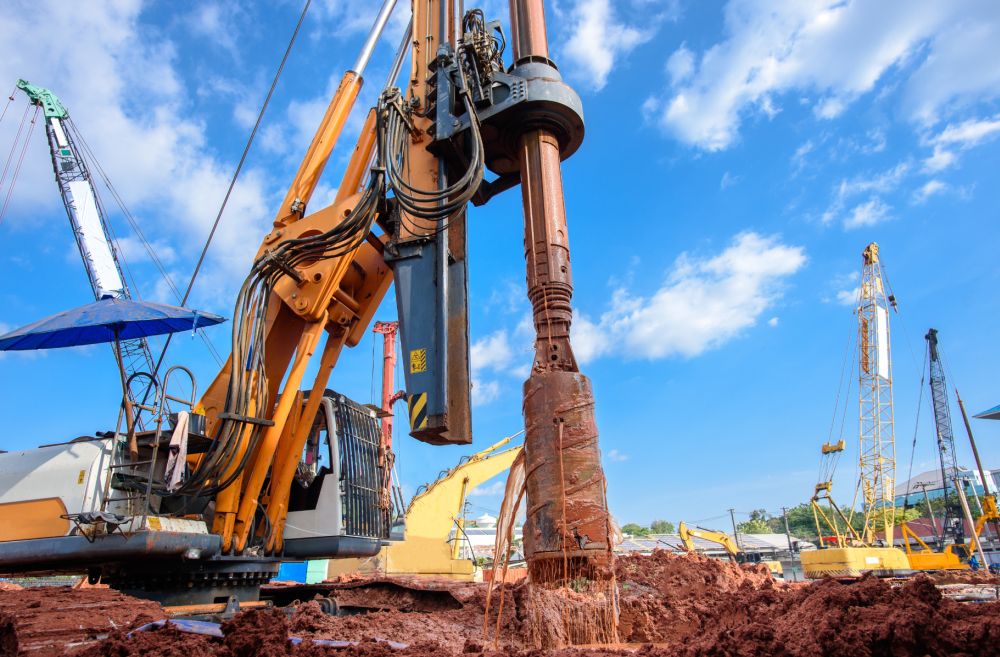
A strong foundation is the backbone of any safe and durable construction project. Whether it is a high-rise building, bridge, or industrial facility, the stability of the structure depends heavily on how well the ground is prepared and reinforced. In modern construction, advanced machinery plays a crucial role in ensuring precision and strength during foundation work.
A pile drilling machine is essential in modern foundation engineering because it enables accurate and deep drilling into the ground to create stable pile foundations. Using a pile drilling machine allows contractors to reach required depths with better control, ensuring that the load of the structure is properly transferred to stronger soil layers beneath the surface. This reduces the risk of uneven settlement and structural instability over time.
Table of Contents
ToggleUnderstanding the Role of Pile Drilling in Construction
Foundation work involves transferring structural loads from buildings to deeper, more stable soil or rock layers. Traditional excavation methods often struggle in challenging soil conditions, especially in loose, waterlogged, or uneven terrains. This is where drilling-based piling systems become highly valuable.
A pile drilling system creates deep vertical holes where reinforced concrete or steel piles are inserted. These piles act as support columns that anchor the structure firmly into the ground. The precision of modern drilling equipment ensures that each pile is placed accurately according to engineering specifications, which is critical for large-scale infrastructure projects.
How a Pile Drilling Machine Improves Foundation Stability
The use of advanced drilling equipment significantly enhances foundation performance in multiple ways. One of the most important factors is load distribution. By drilling deep and installing piles into stable soil layers, the weight of the structure is distributed more evenly, reducing pressure on surface soil.
Another key advantage is reduced soil disturbance. Compared to older methods like hammer driving, drilling causes less vibration and minimal disruption to surrounding soil structures. This is especially important in urban construction areas where nearby buildings must remain unaffected.
Additional ways it improves stability include:
- Increased load-bearing capacity of foundations
- Better performance in weak or sandy soil conditions
- Reduced risk of structural settlement or shifting
- Improved precision in pile placement and depth control
- Enhanced safety during foundation construction work
These benefits make drilling-based pile installation a preferred method in modern engineering projects where safety and durability are top priorities.
Importance in Different Soil Conditions
Soil conditions vary significantly from one construction site to another. Some sites may have dense clay, while others may consist of loose sand or mixed soil layers. A major advantage of using drilling equipment is its adaptability to different environments.
In soft soil areas, deep pile installation is necessary to reach more stable layers. In rocky terrains, specialized drilling tools allow penetration without damaging structural alignment. This flexibility ensures that construction projects can proceed without major delays caused by ground conditions.
Applications in Modern Infrastructure Projects
Pile drilling technology is widely used across various sectors of construction. Its ability to provide strong and reliable foundations makes it essential for both small and large-scale projects.
Common applications include:
- High-rise residential and commercial buildings
- Bridges and overpasses
- Railways and highway infrastructure
- Industrial plants and warehouses
- Coastal and offshore structures
Each of these projects requires a foundation system capable of withstanding heavy loads and environmental stress, making drilled piles a reliable solution.
Enhancing Efficiency and Construction Quality
Beyond stability, pile drilling systems also improve overall construction efficiency. Automated and semi-automated drilling equipment reduces manual labor and speeds up the foundation process. This leads to shorter project timelines and more consistent results.
Accurate drilling also minimizes material wastage, as engineers can better control the amount of concrete and reinforcement required for each pile. This contributes to cost efficiency without compromising structural integrity.
Conclusion
Foundation stability is one of the most critical aspects of any construction project, and modern drilling technology has significantly improved how it is achieved. By enabling precise, deep, and efficient pile installation, a pile drilling machine plays a key role in ensuring long-term structural safety and durability. Its adaptability to different soil conditions and ability to enhance load distribution make it an indispensable tool in today’s construction industry.