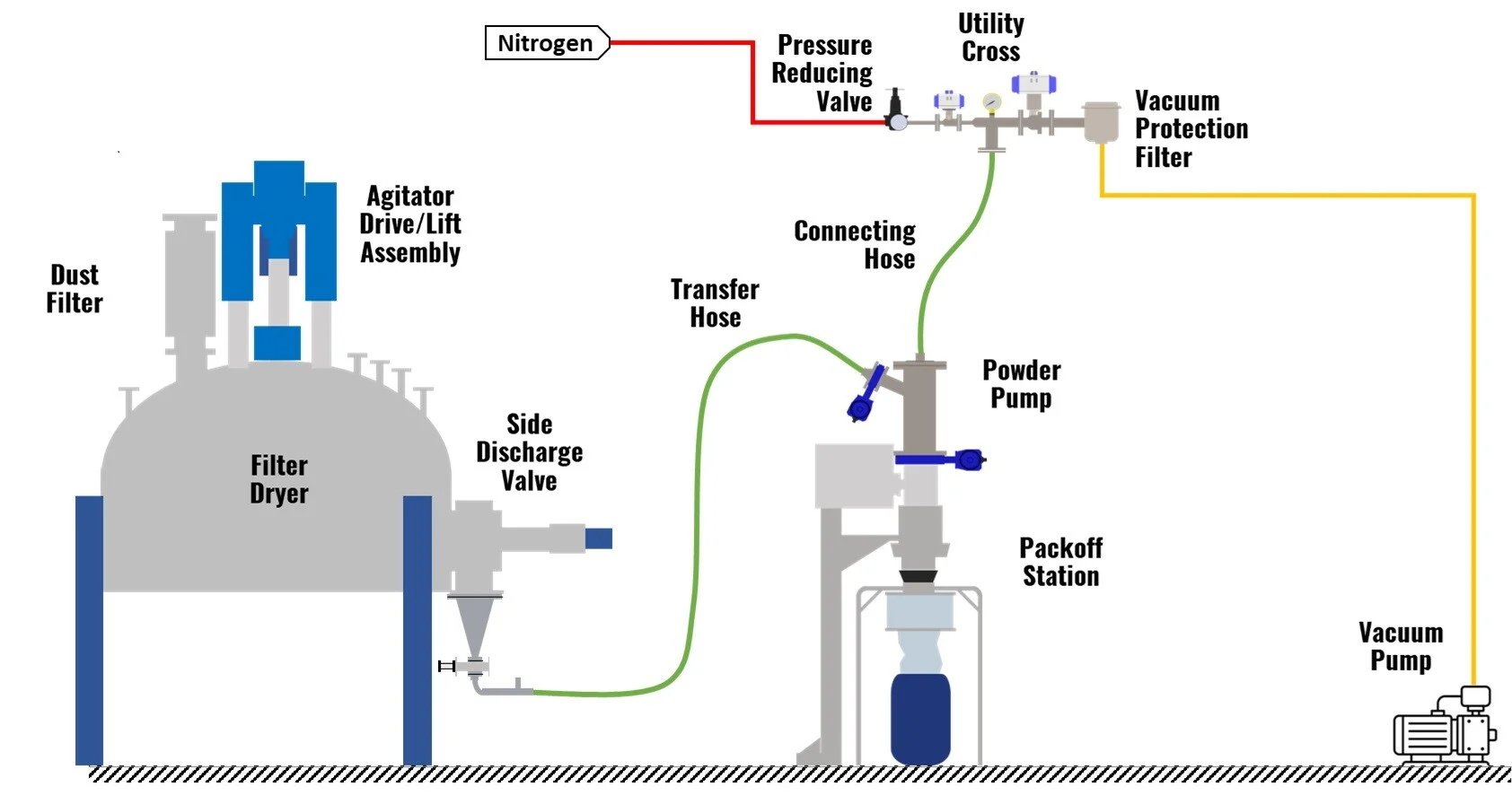
Agitated Nutsche Filter Dryers (ANFDs) are essential in industries such as pharmaceuticals, chemicals, and food processing for their ability to perform filtration, washing, and drying in a single vessel. The performance and longevity of an ANFD heavily depend on careful material selection and design considerations. Choosing the right materials and designing the equipment to meet operational requirements ensures efficient processing, high product quality, and compliance with safety and regulatory standards.
An Agitated Nutsche Filter Dryer integrates multiple operations—filtration, washing, and drying—into a single enclosed system. It consists of a cylindrical vessel, a perforated filter plate, a mechanical agitator, and integrated heating and vacuum systems. The choice of construction materials and specific design features are critical for handling different chemical properties, thermal requirements, and operational stresses. For industrial-grade options and detailed specifications, you can explore this Agitated Nutsche Filter Dryer, widely used in chemical and pharmaceutical production for its robust design and versatility.
Table of Contents
ToggleMaterial Selection
Material selection is one of the most important considerations when designing an ANFD. The materials must withstand chemical corrosion, mechanical stress, thermal cycles, and sometimes abrasive solids. Common materials used in construction include:
-
Stainless Steel: Grades such as 304 and 316 are commonly used due to their excellent corrosion resistance, ease of cleaning, and compatibility with pharmaceutical and food products. Stainless steel also withstands moderate thermal stress, making it ideal for vessels exposed to heated solvents or vacuum drying.
-
Carbon Steel: Often used for less corrosive applications, carbon steel provides cost-effective mechanical strength. It is usually coated or lined with corrosion-resistant materials if the product is chemically aggressive.
-
Specialty Alloys: In cases where products are highly corrosive or reactive, alloys such as Hastelloy or titanium may be employed. These materials offer superior chemical resistance but come at a higher cost.
-
Filter Media: The filter plate requires durable filter media capable of supporting solids while allowing liquid to pass through. Options include woven metal mesh, synthetic cloth, or perforated stainless steel plates, chosen based on particle size, chemical compatibility, and mechanical strength.
Design Features for Efficiency
Design considerations for an ANFD go beyond material selection. The geometry, agitation system, heating, and vacuum design all influence process efficiency and product quality.
-
Vessel Design: The vessel must be able to withstand vacuum or slight pressure conditions while maintaining structural integrity. Rounded bottoms or conical designs are preferred for efficient drainage and easier discharge of solids.
-
Agitator Design: Agitators are available in plough, paddle, or anchor designs depending on the viscosity and flow characteristics of the solids. The agitator prevents caking, ensures uniform drying, and assists in product discharge. The choice of agitator material must match the vessel’s material for corrosion resistance and durability.
-
Heating Systems: Most ANFDs feature jacketed walls and filter plates for thermal fluid circulation, such as steam or thermal oil. Proper heat transfer is crucial to ensure uniform drying without overheating sensitive materials. Thermal conductivity and compatibility with heating media are key design factors.
-
Vacuum System: Efficient moisture removal relies on a vacuum system that is appropriately sized for the vessel volume and product type. The vacuum reduces the boiling point of liquids, allowing drying at lower temperatures, which is critical for heat-sensitive materials.
Safety and Compliance Considerations
Safety is a vital aspect of ANFD design. The equipment must comply with industry-specific regulations such as cGMP in pharmaceuticals or environmental safety standards for chemical production. Considerations include:
-
Sealed Operation: A fully enclosed design prevents operator exposure to hazardous materials and reduces contamination risk.
-
Pressure Relief: Vessels must include relief systems to prevent overpressure scenarios.
-
Explosion-Proof Features: For flammable or reactive chemicals, the ANFD may require explosion-proof motors, electrical systems, and inert gas purging capabilities.
Maintenance and Longevity
Material and design choices directly affect maintenance requirements and the lifespan of the ANFD. Corrosion-resistant materials reduce the frequency of repairs, while well-designed agitators and discharge systems minimize mechanical wear. Ease of cleaning is also critical, particularly in pharmaceutical or food applications, where contamination can compromise batches. Smooth, polished surfaces and sanitary design reduce the time and effort needed for cleaning validation and regulatory compliance.
Customization for Specific Applications
Different industries and products require tailored ANFD designs. For example, in pharmaceuticals, maintaining purity and preventing cross-contamination is paramount, necessitating high-quality stainless steel and sanitary design. In chemical production, abrasion-resistant surfaces or specialty alloys may be needed for handling reactive or abrasive solids. Choosing the appropriate combination of materials, vessel geometry, agitator type, and heating and vacuum systems ensures optimal performance for the intended application.
Conclusion
Selecting the right materials and design features for an Agitated Nutsche Filter Dryer is essential to achieving process efficiency, product quality, and operational safety. Material choices must account for chemical compatibility, corrosion resistance, and mechanical strength, while design considerations ensure uniform drying, effective agitation, and safe operation. By carefully integrating these factors, manufacturers can optimize ANFD performance, extend equipment lifespan, and maintain compliance with industry standards. Properly designed and constructed ANFDs are versatile tools capable of handling a wide range of products, making them a cornerstone of modern batch processing in chemical, pharmaceutical, and food industries.