

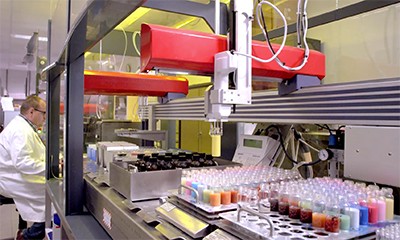
Ink manufacturing relies on precise engineering systems that can handle mixing, grinding, dispersion, and quality control with high consistency. A modern production setup is not a single machine but an integrated system where each component plays a specific role in transforming raw materials into high-quality ink.
Understanding how an Ink Production Machine is structured helps manufacturers improve efficiency, reduce waste, and maintain stable product quality. A complete system such as the Ink Production Machine is designed to streamline every stage of production, from raw material handling to final packaging.
Table of Contents
ToggleRaw Material Handling System
The process begins with the raw material handling unit, which ensures accurate measurement and safe transfer of ingredients such as pigments, resins, solvents, and additives.
This system typically includes:
- Storage tanks for raw materials
- Automatic dosing units
- Transfer pumps and pipelines
- Mixing preparation tanks
Accurate dosing at this stage is essential because even small variations can affect final ink quality.
Pre-Mixing Tank
Before fine grinding begins, materials are blended in a pre-mixing tank. This step ensures that pigments and binders are evenly distributed in the liquid medium.
Key functions include:
- Initial dispersion of solid particles
- Viscosity adjustment
- Formation of a stable slurry
- Preparation for fine grinding
A well-mixed slurry improves the efficiency of downstream processing.
Grinding and Dispersion System
The grinding system is the core of ink production. It is responsible for reducing pigment particle size and ensuring uniform dispersion throughout the mixture.
This system often includes bead mills or high-speed dispersers that generate strong mechanical forces.
Main functions:
- Breaking down pigment agglomerates
- Achieving fine particle size reduction
- Enhancing color strength and stability
- Ensuring smooth texture
This stage directly determines the quality and performance of the final ink product.
Circulation and Mixing Unit
In continuous production systems, circulation plays an important role in maintaining uniformity. The ink mixture is repeatedly circulated through the grinding system to ensure consistent quality.
This unit helps:
- Maintain even particle distribution
- Prevent sedimentation
- Improve mixing efficiency
- Ensure batch consistency
Continuous circulation ensures that no part of the mixture is under-processed.
Cooling and Temperature Control System
During grinding and mixing, heat is naturally generated due to mechanical energy. Excess heat can negatively affect ink stability and quality.
To prevent this, modern systems include cooling mechanisms such as:
- Water jackets around tanks
- External cooling units
- Temperature sensors and controllers
Temperature control ensures that sensitive ingredients are not damaged during processing.
Filtration System
After grinding, the ink passes through a filtration system to remove impurities and oversized particles. This step ensures smooth final product quality.
Functions include:
- Removing foreign particles
- Eliminating unmixed residues
- Improving product smoothness
- Preventing printing defects
Filtration is essential for high-quality printing and coating applications.
Storage and Aging Tanks
Once processed, ink is stored in controlled tanks before final packaging. This stage allows for stabilization and quality verification.
These tanks help:
- Maintain product consistency
- Allow controlled aging if required
- Prevent contamination
- Ensure batch uniformity
Proper storage ensures long-term stability of the ink.
Filling and Packaging System
The final stage of production involves automated filling and packaging systems. These systems ensure accurate measurement and hygienic handling.
Key features include:
- Precise filling machines
- Sealing and labeling units
- Batch coding systems
- Automated container handling
Automation in this stage improves efficiency and reduces human error.
Control and Automation System
Modern ink production systems are highly automated. Centralized control systems monitor and regulate every stage of production.
They manage:
- Mixing speeds and timing
- Grinding pressure and flow rates
- Temperature control
- Material dosing accuracy
Automation ensures consistency, reduces operational errors, and improves overall efficiency.
Conclusion
A modern ink production system is made up of multiple integrated components, each designed to perform a specific function in the manufacturing process. From raw material handling and grinding to filtration and packaging, every stage contributes to the final product quality.
A well-designed Ink Production Machine ensures smooth coordination between these systems, resulting in consistent, high-quality ink production. As industrial demands continue to grow, efficient and automated production systems remain essential for achieving reliability, precision, and scalability.