Selecting the right CNC lathe is an important decision for any machining business. The machine you choose can affect production speed, dimensional accuracy, tooling costs, maintenance requirements, and the range of components you can manufacture. Looking beyond the purchase price helps ensure the equipment matches your actual production needs.
When reviewing a CNC Lathe Machine for Sale, start by examining the specifications that directly influence machining performance. JSWAY is one manufacturer to consider, but buyers should evaluate every machine according to its capabilities, application requirements, and expected operating conditions.
Turning Capacity
Turning capacity is one of the first specifications to check. It indicates the size of workpieces the machine can accommodate and process effectively.
Pay attention to maximum turning diameter, maximum turning length, and swing over the bed. These measurements should comfortably cover the dimensions of your typical components rather than only your largest occasional job.
A machine with insufficient capacity can limit production flexibility, while an unnecessarily large machine may increase costs and consume valuable floor space.
Spindle Speed and Power
The spindle controls the rotation of the workpiece, making its specifications central to cutting performance. Maximum spindle speed and motor power should be evaluated together.
Higher spindle speeds can be useful for smaller-diameter components and certain finishing operations. Meanwhile, adequate motor power is important for demanding cuts, larger workpieces, and harder materials.
Rather than choosing the highest available figures, consider the materials, diameters, tooling, and cutting conditions used in your regular production.
Spindle Bore
Spindle bore is particularly important when working with bar stock. It determines the maximum diameter of material that can pass through the spindle.
If your production involves long bars or repeated bar-fed operations, compare the bore size with your raw material dimensions. A suitable bore can provide greater flexibility and reduce restrictions during production.
Machine Accuracy and Repeatability
Accuracy and repeatability are critical when manufacturing components with tight dimensional tolerances.
Positioning accuracy indicates how closely the machine can move to a programmed location, while repeatability indicates how consistently it can return to that location.
Also consider machine rigidity, ballscrew construction, guideway design, thermal stability, and overall build quality. These factors can influence real-world machining results just as much as the stated accuracy figures.
CNC Control System
The control system determines how operators program and manage the machine. A practical interface can make setup, programming, monitoring, and troubleshooting more efficient.
When evaluating the control, check whether it supports the programming methods and functions required by your production process. Data transfer, tool compensation, diagnostics, coordinate management, and program storage are also worth reviewing.
For facilities with multiple CNC machines, compatibility with existing programming and operator workflows can be an additional advantage.
Turret Configuration
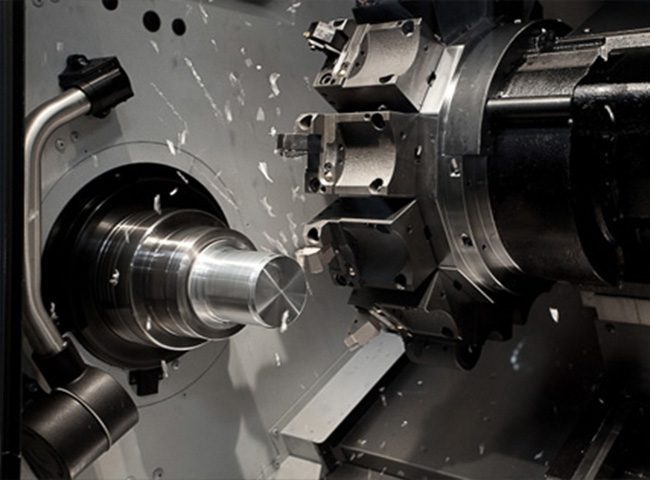
The turret holds and indexes cutting tools during machining. Its capacity and design can have a direct effect on productivity.
Consider the number of tool stations, indexing time, tool holder type, and compatibility with the tools you already use. If your components require drilling, milling, or other secondary operations, determine whether driven tooling is available.
A suitable turret configuration can reduce setup changes and allow more operations to be completed in a single cycle.
Chuck and Workholding System
Reliable workholding is essential for safe and consistent machining. Check the chuck diameter, gripping range, chuck type, and compatibility with alternative workholding equipment.
The right chuck should securely hold the intended workpieces without unnecessarily restricting access to the cutting area.
For repetitive production, hydraulic or pneumatic workholding may also be worth considering because it can improve consistency and reduce manual intervention.
Guideways and Machine Rigidity
Machine construction has a major effect on cutting stability. A rigid CNC lathe can help minimize vibration and maintain consistent machining conditions during heavier operations.
Review the bed structure, guideway arrangement, casting design, and machine weight. These characteristics can provide useful insight into how the machine is designed to handle continuous production.
Rigidity is especially important when machining difficult materials or removing substantial amounts of material in each cycle.
Feed Rates and Rapid Traverse
Feed rate affects how quickly cutting operations can be performed, while rapid traverse determines how quickly the machine moves between non-cutting positions.
Higher rapid movement speeds can reduce idle time, but they should not be considered in isolation. The overall cycle time also depends on cutting conditions, tool changes, workpiece geometry, and programming.
Compare these specifications with your existing production cycle to determine whether higher speeds would provide a meaningful productivity improvement.
Tooling Compatibility
Tooling requirements should be considered before purchasing a CNC lathe. Different machines may support different tool holder standards, insert configurations, and turret arrangements.
Check whether your existing tooling can be used or whether a significant investment in new holders and accessories will be necessary.
It is also useful to consider the availability and cost of replacement tooling. Long-term tooling expenses can have a noticeable effect on the machine’s overall operating cost.
Automation and Accessories
Automation can be valuable for businesses producing large quantities of similar components. Depending on the application, useful options may include bar feeders, parts catchers, robotic loading, automatic tool measurement, and chip management systems.
However, automation is not automatically beneficial for every operation. Low-volume or highly varied production may benefit more from flexibility and quick manual setup.
Evaluate accessories based on actual workflow requirements and expected production volume.
Maintenance and Serviceability
A CNC lathe should be evaluated for more than machining specifications. Maintenance requirements can have a significant effect on uptime and long-term ownership costs.
Review lubrication systems, access to service points, coolant management, chip removal, and routine inspection requirements.
Before purchasing, also investigate the availability of replacement components, technical documentation, training, and service support. Easy access to assistance can be valuable when unexpected issues affect production.
Energy and Space Requirements
The machine must fit the physical and electrical conditions of your facility. Check overall dimensions, machine weight, power requirements, voltage specifications, and installation requirements.
Adequate floor space should be available not only for the machine itself but also for loading, unloading, maintenance, chip handling, and operator movement.
Planning these requirements in advance can prevent installation complications after purchase.
Total Cost of Ownership
The initial purchase price provides only part of the financial picture. A proper evaluation should also consider tooling, electricity, coolant, lubrication, maintenance, spare parts, and potential automation costs.
A less expensive machine may not necessarily provide the lowest operating cost if it has higher maintenance requirements or limited productivity.
Conversely, a machine with a higher initial price may offer better value if its capabilities closely match demanding production requirements and help reduce cycle times or downtime.
How to Make the Final Comparison
After identifying several suitable machines, create a specification checklist and compare each model against the same criteria.
Focus particularly on:
- Turning diameter and length
- Spindle speed, power, and bore
- Accuracy and repeatability
- Turret capacity and tooling compatibility
- CNC control functions
- Chuck and workholding options
- Machine rigidity
- Feed and rapid traverse rates
- Automation compatibility
- Maintenance and service requirements
- Installation and operating costs
This makes the evaluation more objective and helps prevent one impressive specification from overshadowing other important factors.
Choose Based on Your Actual Application
The ideal CNC lathe is not necessarily the fastest, largest, or most powerful model available. Its value depends on how well its specifications align with the parts, materials, tolerances, production volume, and workflow it will handle.
Before making a purchase, review the complete technical specification, identify which features are standard or optional, and consider the long-term operating requirements. A careful comparison can help you select a machine that delivers the required performance without paying for capabilities your operation does not need.