In modern manufacturing, packaging equipment must do more than perform basic operations. It needs to deliver consistent results, maintain production flow, minimize interruptions, and adapt to changing packaging requirements. Carton erection is an important stage in this process because poorly formed boxes can cause problems during product loading, sealing, and transportation. Selecting equipment with the right technical features helps manufacturers maintain dependable packaging operations.
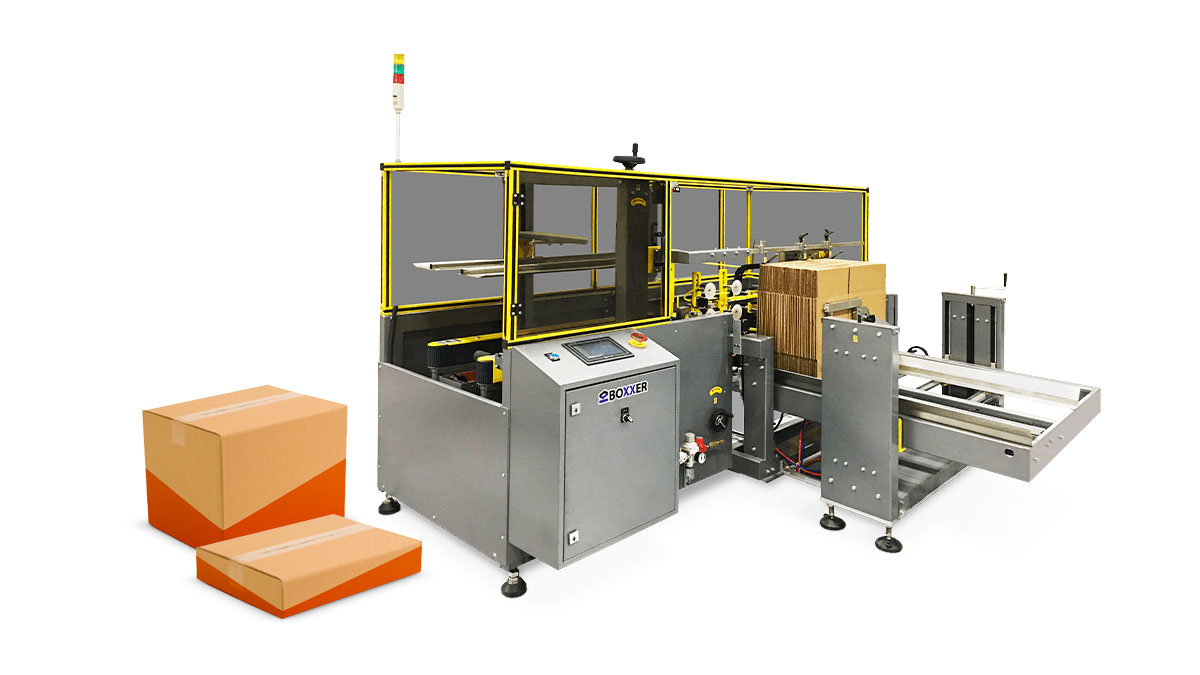
A Case Erector Machine automates the process of opening flat corrugated blanks, folding carton flaps, and securing the bottom of each box. Its performance depends on several design elements, including the carton feeding mechanism, forming system, control technology, and sealing arrangement. Understanding these features makes it easier to evaluate equipment and choose a solution that meets specific production requirements.
1. Automatic Carton Feeding System
A dependable feeding system is one of the most important features of an efficient case erector. It supplies flat carton blanks from a storage magazine and transfers them into the forming section in a controlled sequence.
An effective feeding mechanism should:
- Handle carton blanks without unnecessary deformation.
- Maintain consistent separation between individual blanks.
- Minimize feeding errors and double picks.
- Support reliable operation during continuous production.
- Allow convenient replenishment of the carton magazine.
Vacuum suction cups or mechanical pickup arrangements may be used depending on the machine design. The feeding system should also be compatible with the corrugated board quality and carton dimensions used by the manufacturer.
2. Accurate Carton Opening and Forming
After a flat blank is picked up, it must be opened into the correct rectangular shape. Accurate forming is essential because an improperly opened carton may not move smoothly through the packaging line.
Reliable forming mechanisms use controlled movements to position the carton panels and establish the required shape. Consistent carton opening helps ensure that the bottom flaps align correctly before sealing.
Manufacturers should look for equipment that maintains stable carton geometry across production runs. This is especially important when cartons are transferred directly to automated filling or case packing equipment.
3. Reliable Bottom Sealing Mechanism
Once a carton has been opened and positioned, its bottom flaps must be secured to create a stable base.
Depending on the machine configuration, sealing may be performed using pressure-sensitive tape or hot-melt adhesive. Both methods can provide dependable results when properly matched to the carton material and application.
Important considerations include:
- Consistent tape positioning or adhesive application.
- Secure closure of the carton bottom.
- Compatibility with the required carton dimensions.
- Easy access for inspection and maintenance.
- Minimal interruptions caused by sealing material changes.
The sealing method should be selected according to packaging requirements, shipping conditions, and the type of corrugated board being used.
4. Adjustable Carton Size Settings
Manufacturers often work with different carton dimensions to accommodate changing product sizes and packaging formats. A machine that supports convenient adjustments can help reduce changeover time between production runs.
Useful adjustment features may include accessible guides, adjustable forming components, and clearly defined setup positions.
When evaluating this capability, manufacturers should consider:
- The minimum and maximum carton dimensions supported.
- The time required to change between carton sizes.
- Whether adjustments require tools.
- The repeatability of settings after a changeover.
- The availability of setup instructions for operators.
A suitable adjustment system helps businesses handle multiple packaging formats without unnecessary setup complexity.
5. User-Friendly Control System
Modern packaging equipment often uses programmable logic controllers and operator interfaces to manage machine functions. These controls help coordinate carton feeding, forming, flap folding, and sealing operations.
A well-designed control system should provide clear operating information and make common adjustments straightforward.
Useful functions can include:
- Start and stop controls.
- Operating status indicators.
- Fault and alarm notifications.
- Production setting adjustments.
- Emergency stop functionality.
- Diagnostic information for troubleshooting.
An intuitive interface can also reduce operator training time and help production personnel identify operating issues more quickly.
6. Sensors and Automatic Fault Detection
Sensors help a case erector monitor different stages of its operating cycle. Depending on the machine design, they may detect carton presence, feeding position, machine movement, or other process conditions.
These components help identify problems before they develop into more serious production interruptions.
For example, a carton detection sensor can help prevent a forming cycle from proceeding when a blank is not correctly positioned. Other monitoring devices may help identify material shortages or abnormal machine conditions.
Automatic fault detection can improve operational reliability, but sensors must be properly positioned, maintained, and tested to perform effectively.
7. Durable Mechanical Construction
The quality of a machine’s mechanical construction has a direct effect on its long-term performance. Case erectors operate through repeated movements, making structural stability and component durability important considerations.
Manufacturers should evaluate the quality of the frame, drive components, folding mechanisms, bearings, and other moving parts.
A well-constructed machine should be designed to withstand the demands of its intended production environment. Component accessibility is also important because it makes routine inspection, lubrication, and replacement easier.
Durability should be assessed alongside the availability of technical support and spare parts rather than treated as a standalone specification.
8. Consistent Operating Speed
Production speed is an important factor when choosing carton erection equipment. However, the most suitable machine is not necessarily the one with the highest advertised output.
The equipment should be capable of supplying cartons at a rate that matches the requirements of the downstream packaging process.
Manufacturers should consider:
- Required cartons per minute.
- Carton dimensions and board characteristics.
- Frequency of size changeovers.
- Availability of cartons and other packaging materials.
- Compatibility with filling and case packing equipment.
A properly matched operating speed helps prevent carton shortages and reduces the risk of excessive accumulation between packaging stages.
9. Easy Maintenance and Component Accessibility
Even reliable packaging equipment requires routine maintenance. Machines that provide convenient access to important components can simplify inspections and reduce service time.
Maintenance-friendly features may include accessible adjustment points, clearly identified components, removable guards for authorized servicing, and straightforward access to the feeding and sealing sections.
A practical maintenance plan should cover:
- Cleaning carton dust and debris.
- Inspecting suction cups and feeding components.
- Checking belts, chains, and mechanical connections.
- Verifying sensor operation.
- Inspecting tape or adhesive application systems.
- Replacing worn parts according to manufacturer recommendations.
Preventive maintenance helps reduce unexpected downtime and supports consistent carton formation.
10. Safety Features for Operators
Operator safety is essential in automated packaging environments. A case erector should include appropriate protective measures to reduce exposure to moving mechanical parts.
Depending on its design and application, important safety provisions may include:
- Emergency stop buttons.
- Protective guards and access panels.
- Safety interlocks.
- Clearly marked operating controls.
- Appropriate warning labels.
- Safe procedures for clearing carton jams.
Manufacturers should also provide operator training and follow the equipment supplier’s safety instructions. Maintenance and troubleshooting should be performed using approved procedures.
11. Compatibility with Packaging Line Equipment
A case erector usually works alongside other packaging machines rather than operating independently. Its ability to communicate and transfer cartons effectively to downstream equipment is therefore an important feature.
It may be integrated with:
- Product filling and loading systems.
- Automatic case packers.
- Carton conveyors.
- Case sealing machines.
- Inspection and coding equipment.
- Robotic or automatic palletizing systems.
Compatibility should be assessed through carton dimensions, conveyor heights, transfer speeds, control signals, and available floor space.
A properly integrated system helps maintain smooth carton movement and reduces the possibility of bottlenecks.
How to Evaluate These Features Before Purchasing
Comparing equipment based on a single specification can lead to an unsuitable selection. Manufacturers should assess the machine as part of their complete packaging operation.
A practical evaluation should include:
| Evaluation area | What to check |
|---|---|
| Carton compatibility | Supported dimensions, board type, and blank quality |
| Production capacity | Required output and actual operating conditions |
| Feeding performance | Consistent blank pickup and separation |
| Forming accuracy | Stable carton shape and flap alignment |
| Sealing quality | Reliable tape or adhesive application |
| Changeovers | Adjustment time and ease of operation |
| Controls | Interface clarity, alarms, and diagnostics |
| Maintenance | Component access and spare parts availability |
| Safety | Guards, interlocks, and emergency stops |
| Integration | Compatibility with existing packaging equipment |
It is also useful to request a demonstration using the actual carton blanks intended for production. This allows manufacturers to evaluate feeding performance, carton formation, sealing quality, and changeover procedures under realistic conditions.
Conclusion
The efficiency and reliability of a case erector depend on the combination of its feeding system, carton forming mechanism, sealing technology, controls, sensors, and mechanical construction. Features such as adjustable carton settings, accessible maintenance points, operator safety provisions, and packaging line compatibility also contribute to long-term performance.
Manufacturers should evaluate these elements according to their carton specifications, production targets, and operating environment. Choosing equipment that meets the requirements of the complete packaging process can help maintain consistent carton preparation, reduce manual work, and support smoother production operations.