Buying an ablution fixture is a decision that affects the everyday use of a bathroom or prayer facility. The right product should provide a comfortable washing position, fit the available floor area, and withstand regular exposure to water. It should also be straightforward to clean and compatible with the building’s plumbing. Comparing these factors before placing an order helps avoid choosing a fixture that looks suitable but proves awkward once installed.
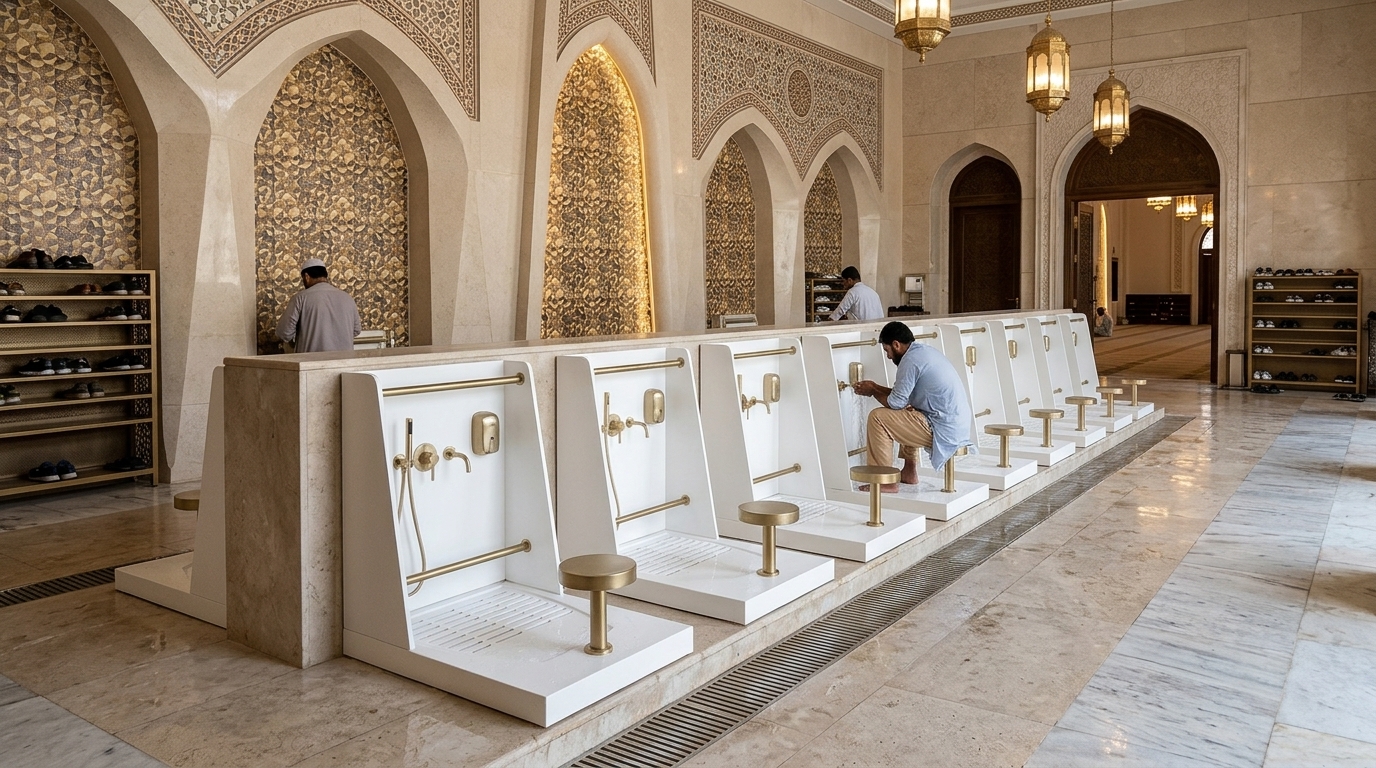
A Wudu sink is designed to accommodate the practical movements involved in wudu. Depending on its form, it may have a lower washing section, a foot-washing recess, a broad bowl, or tap fittings positioned for convenient rinsing. Because manufacturers use different configurations, buyers should examine product specifications, drawings, and installation guidance to understand exactly what each model offers.
Start with the Intended Installation
The first step is deciding where the fixture will be used. A private bathroom, ensuite, prayer room, and mosque each present different requirements. In a family home, comfort and compact dimensions may be the main priorities. A mosque may need several stations, durable components, and a layout that supports frequent use by different people.
Think about how many users will rely on the fixture and when it is likely to be busiest. In shared facilities, peak demand can be more important than average daily use. The number of basins, available standing space, and capacity of the drainage system should be considered together.
Compare the Main Design Features
Basin height affects how naturally users can reach the washing area. A design that is too high may not make foot washing comfortable, while a very low fixture could make hand and face washing inconvenient. Consider the range of users rather than choosing a height based on one person’s preference.
The bowl’s width and depth influence how much room is available for washing and how effectively water is contained. A deeper basin may help limit splashing, but its internal shape should still allow easy access. If a model includes a separate foot-washing area, check its dimensions and position.
Tap placement is equally important. The outlet should direct water into the basin, and the controls should be easy to reach. Ask whether the product is supplied with a tap or whether compatible fittings must be purchased separately. This detail can affect both the total cost and the installation schedule.
Evaluate Materials and Finish
Ablution fixtures are used frequently, so the basin material should suit a wet environment and a regular cleaning routine. Ceramic is a familiar bathroom option, while solid-surface materials can offer different shapes and finish choices. The quality of the product, not simply the material category, determines its performance.
Ask the supplier about surface resistance, suitable cleaning products, repair options, and expected maintenance. A smooth finish can make everyday cleaning easier, but decorative textures or complex joints may need more attention. For a public facility, consider whether replacement parts and servicing are readily available.
Check Plumbing and Drainage Requirements
Before purchase, identify the location of water supply lines and the waste connection. Compare them with the manufacturer’s installation drawing. Confirm the required outlet size, tap connections, mounting hardware, and any access needed for future maintenance.
Drainage is especially important because the fixture may be used repeatedly throughout the day. The basin should empty reliably, and the surrounding floor should be suitable for occasional splashing. A plumber can assess whether the existing pipework is adequate, particularly where multiple stations will operate simultaneously.
Think About Safety and Accessibility
The space around the basin is part of the product’s usability. Users need enough room to approach, stand, and move away without obstruction. Choose floor finishes appropriate for wet conditions and avoid layouts that force people to step over raised edges or squeeze between fixtures.
For households with children or older adults, consider reach, stability, and ease of operating the tap. Shared facilities should provide clear circulation routes and enough spacing for different users. Accessibility needs may require a tailored design rather than a standard installation.
Calculate the Full Cost
Compare more than the purchase price. Include delivery, taps, fittings, plumbing alterations, waterproofing, installation labour, and ongoing maintenance. Review the warranty and clarify what it covers. A slightly more expensive model may represent better value if it is easier to service and more suitable for frequent use.
Choose for Everyday Performance
A successful purchase balances design, comfort, installation practicality, and long-term care. By measuring the room, identifying user needs, and checking technical details, buyers can select a fixture that supports regular ablution without creating avoidable maintenance problems. The best option is the one that works reliably in its intended setting.