Buying swimming pool equipment requires careful planning to ensure every product meets your pool’s needs, performs reliably, and offers good long-term value. From pumps and filtration systems to cleaning tools, water testing kits, and safety accessories, the right choices can make pool maintenance easier and help keep the water clean, clear, and comfortable. However, selecting products based only on price or appearance can lead to compatibility problems, unnecessary expenses, and disappointing performance.
Before making a purchase, consider your pool’s size, construction, frequency of use, local climate, and maintenance requirements. Comparing suitable swimming pool equipment and supplies can help you identify products that fit your setup and budget. A thoughtful buying process also involves checking specifications, energy efficiency, durability, warranty coverage, and installation requirements so that each investment contributes to a dependable swimming environment.
1. Assess Your Pool’s Specific Requirements
The first step in buying pool equipment is understanding what your pool actually needs. Different pools require different equipment capacities, materials, and maintenance approaches.
Consider Pool Size and Water Volume
Pool size affects the selection of pumps, filters, heaters, and cleaning equipment. A larger pool generally requires greater treatment capacity, while a smaller pool may operate efficiently with more compact equipment.
Calculate the approximate water volume and review the manufacturer’s recommendations before selecting equipment. For irregularly shaped pools, a pool professional can help estimate the volume accurately.
Identify Your Pool Type
Above-ground, in-ground, indoor, and outdoor pools may have different installation and operating requirements.
For example, an above-ground pool may use a compact filtration system, while a large in-ground pool may require more extensive plumbing and a separate equipment installation area. Indoor pools may also need additional humidity management and ventilation considerations.
Evaluate How Often the Pool Is Used
A pool used daily by several swimmers may require more frequent cleaning and closer monitoring than one used occasionally. Heavy use can increase the amount of sunscreen, body oils, and other contaminants entering the water.
Understanding your usage patterns helps you select suitable filtration capacity, cleaning equipment, and water treatment products.
2. Choose the Right Pool Pump
The pool pump circulates water through the filtration system and connected treatment equipment. Selecting an appropriate pump is essential for reliable circulation and efficient operation.
Compare Single-Speed and Variable-Speed Pumps
Single-speed pumps operate at one fixed speed, while variable-speed models allow the operating speed to be adjusted according to circulation requirements.
Variable-speed pumps can reduce electricity consumption when operated at appropriate lower speeds. However, the actual savings depend on the existing system, pump schedule, plumbing design, and local energy costs.
When comparing models, review:
- Required flow rate and total system resistance.
- Motor type and energy efficiency.
- Noise levels during operation.
- Compatibility with the filter and other equipment.
- Available controls and scheduling features.
- Installation and maintenance requirements.
Avoid selecting a pump based on horsepower alone. A qualified professional can assess the system’s hydraulic requirements and recommend an appropriate model.
3. Compare Pool Filtration Systems
A filter removes suspended particles from circulating water and plays a major role in maintaining water clarity. The best filtration system depends on your maintenance preferences, budget, water conditions, and equipment configuration.
Sand Filters
Sand filters pass water through a filtration medium that captures particles. They are commonly chosen for their straightforward operation and relatively simple maintenance.
Depending on the model and operating conditions, the filter may require periodic backwashing, which uses water and must be managed according to manufacturer instructions.
Cartridge Filters
Cartridge filters use replaceable or reusable filter elements to capture debris. Many models can be cleaned without routine backwashing, potentially reducing water consumption.
Before buying, compare cartridge availability, cleaning requirements, replacement costs, and the filter’s recommended flow rate.
Diatomaceous Earth Filters
Diatomaceous earth filters use a fine filtration medium to capture small particles. They can provide fine filtration but may involve more detailed maintenance and specific handling requirements.
Review the manufacturer’s guidance for cleaning, filter media handling, and waste disposal before choosing this option.
Check Filter Capacity
The filter must be compatible with the pump and able to handle the required flow. An oversized pump connected to an unsuitable filter may create excessive pressure or reduce system performance.
Always check the specifications of both components rather than purchasing them independently.
4. Select Effective Pool Cleaning Equipment
Cleaning equipment helps remove debris, dirt, and contaminants that collect on pool floors, walls, and the water surface.
Manual Cleaning Tools
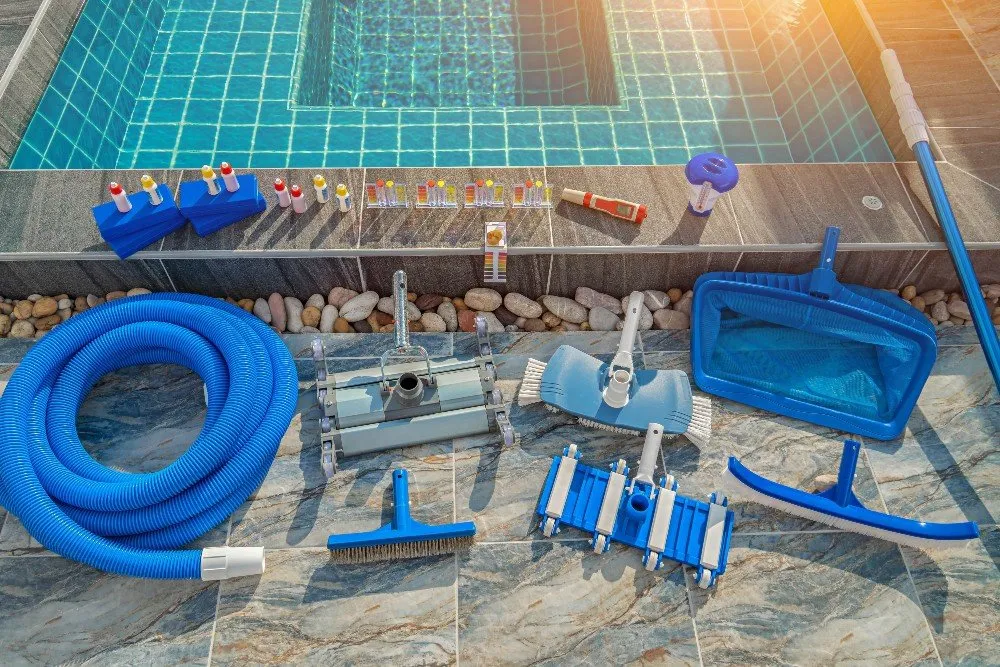
Basic tools remain useful for nearly every pool. Common options include:
- Pool skimmers and leaf nets.
- Brushes suitable for the pool surface.
- Manual vacuum heads and compatible hoses.
- Telescopic poles.
- Tile and waterline cleaning tools.
When buying brushes, confirm that the bristle type is suitable for your pool finish. A brush designed for a hard surface may damage a delicate liner or other sensitive material.
Automatic Pool Cleaners
Automatic cleaners can reduce the time required for routine cleaning. Options include robotic, suction-side, and pressure-side models.
Robotic cleaners often operate independently of the pool’s main circulation system, while suction-side and pressure-side cleaners use different plumbing or circulation arrangements.
Compare each cleaner’s coverage, debris capacity, filtration method, maintenance needs, and compatibility with your pool.
Match the Cleaner to Your Pool
Consider the pool’s dimensions, shape, steps, corners, surface material, and typical debris. A model that works well in a simple rectangular pool may not clean every area effectively in a complex design.
Review the manufacturer’s specifications and warranty terms before purchasing.
5. Buy the Right Water Testing and Treatment Supplies
Water testing and chemical treatment are essential for maintaining appropriate pool water conditions. Even advanced pumps and filters cannot replace routine water testing and sanitation.
Water Testing Kits
Testing products help monitor parameters such as sanitizer concentration and pH. Depending on the pool and treatment system, testing may also include alkalinity, calcium hardness, or other relevant measurements.
Available options include test strips, liquid reagent kits, and digital testing devices.
When comparing them, consider ease of use, measurement range, accuracy, reagent shelf life, and replacement costs. Follow the manufacturer’s directions for collecting samples and interpreting results.
Sanitizers and Balancing Products
Pool maintenance may require sanitizers and products that adjust pH, alkalinity, or hardness. The appropriate products depend on the pool’s sanitation system and water chemistry.
Always check the product label, recommended dosage, compatibility, and handling requirements. Never mix different pool chemicals unless the instructions explicitly require it.
Saltwater Pool Supplies
Saltwater pools still require sanitation and regular water testing. A saltwater chlorination system generates chlorine from dissolved salt, but the cell and other components must be compatible with the pool’s plumbing and operating conditions.
Compare replacement cell availability, maintenance requirements, operating costs, and manufacturer support before purchasing a saltwater system.
6. Evaluate Pool Heating Equipment
A pool heater can extend the swimming season and improve comfort when water temperatures are too low.
Common options include heat pumps, gas heaters, and solar heating systems. Each has different installation requirements, heating speeds, operating costs, and suitability for different climates.
Heat Pumps
Heat pumps use heat from the surrounding air to warm pool water. Their efficiency depends on ambient temperature, water temperature, and operating conditions.
They may be suitable for owners who want regular heating and can accommodate the equipment’s installation requirements.
Gas Heaters
Gas heaters can heat water relatively quickly and may be useful when rapid temperature changes are needed. Operating costs depend on fuel prices, heater efficiency, and how frequently the pool is heated.
Solar Heating
Solar heating systems use solar energy to warm pool water. Performance depends on sunlight, climate, collector area, and system design.
A pool cover can complement a heating system by reducing evaporation and heat loss when the pool is not being used.
Before purchasing any heater, verify its heating capacity, compatibility, installation requirements, and expected operating costs.
7. Prioritize Safety Equipment and Accessories
Safety products should be considered essential rather than optional extras. The right equipment depends on the pool’s design, local regulations, and the people who use it.
Consider products such as:
- Appropriate barriers, gates, and access controls.
- Pool alarms where suitable and legally required.
- Approved rescue equipment.
- Secure ladders, steps, and handrails.
- Properly designed safety covers.
- Clearly visible safety signage where appropriate.
No single product replaces active supervision, safe behavior, and compliance with applicable safety requirements.
Check that safety equipment is designed for its intended purpose, properly rated, and installed according to the manufacturer’s instructions. Electrical components used near water should meet applicable safety standards and be installed by qualified professionals where required.
8. Check Material Quality and Durability
Pool equipment operates in an environment that may include moisture, sunlight, temperature changes, and chemical exposure. Material quality can therefore affect product lifespan and maintenance requirements.
When comparing products, consider:
Corrosion Resistance
Metal components, fasteners, and fittings should be suitable for the pool environment. Saltwater pools may require particular attention to corrosion resistance and material compatibility.
UV Resistance
Outdoor equipment may be exposed to sunlight for extended periods. Look for products designed to withstand the expected level of ultraviolet exposure.
Chemical Compatibility
Pipes, seals, housings, and other components must be suitable for the chemicals and concentrations encountered during normal operation.
Replacement Part Availability
A product may be affordable initially but expensive to maintain if essential parts are difficult to obtain. Check whether filters, seals, cartridges, cleaner components, and other wear items are readily available.
Durable products are not always the most expensive. Compare construction quality, maintenance requirements, and expected service life instead of relying on price as the only indicator.
9. Compare Energy Efficiency and Long-Term Costs
The initial purchase price is only one part of the total cost of owning pool equipment. Electricity, fuel, water, replacement parts, and maintenance can add significantly to lifetime expenses.
Before purchasing, estimate the ongoing cost of operating each option.
| Cost factor | What to evaluate |
|---|---|
| Purchase price | Initial equipment cost and included accessories |
| Energy use | Electricity or fuel required during normal operation |
| Water consumption | Water used for cleaning, backwashing, or other processes |
| Maintenance | Routine servicing and cleaning requirements |
| Replacement parts | Cost and availability of filters, seals, and wear components |
| Installation | Plumbing, electrical work, and any required modifications |
| Warranty | Coverage, exclusions, and service conditions |
A more expensive product may offer better long-term value if it reduces operating costs or requires fewer repairs. However, savings should be estimated realistically using your local utility rates and expected usage.
10. Verify Compatibility Before Purchasing
Compatibility is one of the most important factors in pool equipment selection. A product may have excellent individual specifications but still perform poorly if it does not work with the rest of the system.
Before placing an order, check:
- Whether the pump and filter have compatible flow requirements.
- Whether pipe diameters and connection types match.
- Whether a heater requires a particular flow range or bypass arrangement.
- Whether a cleaner works with your pool surface and plumbing.
- Whether automation controls support the equipment you already own.
- Whether the electrical supply meets the manufacturer’s specifications.
- Whether the product is appropriate for above-ground, in-ground, or indoor installation.
If you are replacing one component, record the existing model number, dimensions, connection type, and relevant performance specifications.
When compatibility is uncertain, ask the manufacturer, supplier, or qualified pool installer to confirm the correct replacement.
11. Understand Warranty Coverage and After-Sales Support
Warranty coverage can make a significant difference when purchasing mechanical or electrical pool equipment.
Read the warranty terms carefully rather than assuming every component receives the same protection. Coverage may vary by product, installation method, usage, and maintenance history.
Look for information about:
- Warranty duration and covered components.
- Exclusions for improper installation or chemical damage.
- Requirements for professional installation.
- Availability of authorized service providers.
- Procedures for making a warranty claim.
- Access to manuals, troubleshooting guidance, and replacement parts.
Reliable after-sales support can be especially important for pumps, heaters, automated cleaners, and electronic controls.
Keep purchase receipts, serial numbers, installation records, and maintenance documentation in a safe place.
12. Choose a Reliable Pool Equipment Supplier
The supplier can influence the buying experience through product information, support, delivery, and access to replacement parts.
Before ordering, review the following points:
Product Information
A dependable supplier should provide clear specifications, compatibility information, installation guidance, and applicable warranty details.
Authenticity and Quality
Check that products are genuine and sourced through appropriate distribution channels. Be cautious of listings with incomplete specifications or unusually low prices that cannot be explained.
Return and Delivery Policies
Review delivery charges, estimated delivery times, return conditions, and procedures for handling damaged or incorrect products.
Technical Support
For complex equipment, access to knowledgeable support can help resolve compatibility questions before purchase and installation problems afterward.
Compare suppliers on overall value and service rather than relying solely on the lowest listed price.
13. Avoid Common Pool Equipment Buying Mistakes
A few avoidable mistakes can lead to unnecessary spending or poor system performance.
Buying equipment that is too large or too small: Select products based on the pool’s actual requirements and manufacturer specifications.
Ignoring installation costs: Pumps, heaters, plumbing changes, and automation systems may require professional installation or electrical work.
Choosing price over suitability: A low-cost product may have limited durability, unavailable parts, or poor compatibility.
Overlooking maintenance needs: Consider the time and expense required to clean, service, and replace components.
Buying unnecessary accessories: Focus on equipment that addresses real maintenance, safety, or comfort needs.
Ignoring product instructions: Installation and operating requirements affect performance, safety, and warranty coverage.
Failing to plan for replacement parts: Filters, cartridges, seals, and other consumable components should be reasonably accessible throughout the product’s service life.
Taking time to compare specifications can help prevent these problems and improve the value of your purchase.
14. Create a Practical Pool Equipment Buying Checklist
Before completing your purchase, review this checklist:
-
Pool size, type, and usage requirements have been identified.
-
Pump and filter capacities are suitable for the circulation system.
-
Cleaning equipment is compatible with the pool’s shape and surface.
-
Water testing and sanitation products meet the pool’s needs.
-
Heating equipment is appropriate for the climate and desired temperature.
-
Safety products meet applicable requirements.
-
Materials are suitable for sunlight, moisture, and pool chemicals.
-
Connection sizes and electrical requirements have been confirmed.
-
Energy use and ongoing maintenance costs have been considered.
-
Warranty coverage and replacement part availability have been checked.
-
The supplier’s delivery, return, and support policies are understood.
-
Installation and maintenance instructions are available.
Use this checklist as a starting point and adjust it according to your pool design, budget, and equipment configuration.
Conclusion
Buying the right swimming pool equipment and supplies begins with understanding your pool’s needs and evaluating how each product will perform within the complete system. Pumps, filters, cleaners, water testing products, heaters, plumbing components, and safety accessories all contribute to a reliable and enjoyable swimming environment.
Before purchasing, compare specifications, compatibility, durability, energy efficiency, maintenance requirements, warranty coverage, and supplier support. Looking beyond the initial price helps you understand the true cost of ownership and avoid equipment that does not suit your installation.
A careful buying decision can simplify routine maintenance, support consistent water quality, and reduce unnecessary operating expenses. By prioritizing essential equipment and selecting products suited to your pool, you can make informed investments that deliver practical value over the long term.