Modern buildings and industrial facilities require insulation solutions that can provide reliable temperature control, reduce energy consumption, and support comfortable indoor environments. From air conditioning systems and refrigeration networks to commercial piping and mechanical equipment, insulation plays an important role in maintaining operational efficiency. Among the available options, flexible foam-based products have become increasingly popular because of their adaptability and practical performance.
Elastomeric Foam Insulation is widely used in heating, ventilation, air conditioning, and refrigeration applications because of its flexible structure, thermal resistance, and moisture-control properties. Its ability to fit around pipes, ducts, and equipment makes it suitable for installations where consistent insulation coverage is important. Depending on the product formulation and system design, it can also contribute to noise reduction and improved acoustic comfort.
Understanding Elastomeric Foam Insulation
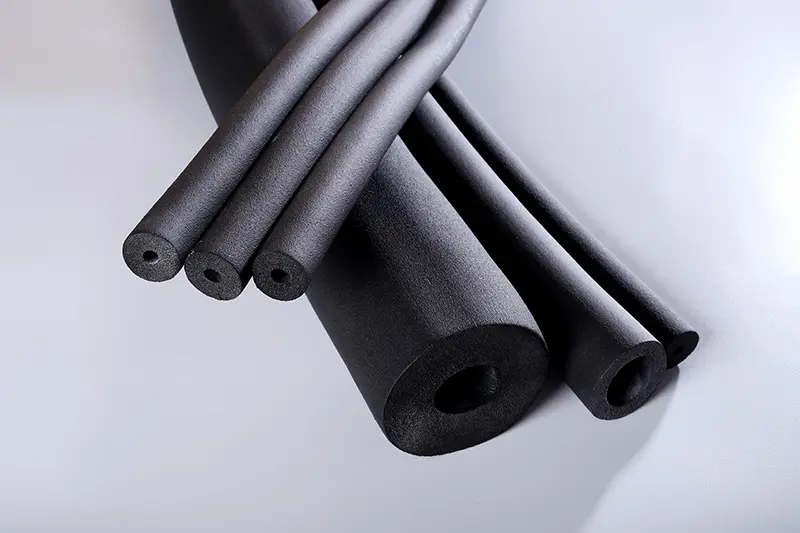
Elastomeric foam insulation is a flexible insulation material generally manufactured from synthetic rubber or related polymer compounds. It is commonly produced in sheets, rolls, tubes, and specialised shapes to accommodate different installation requirements.
Many products feature a closed-cell structure containing small, enclosed gas-filled cells. This structure helps slow heat transfer and limits the movement of water vapour through the insulation.
Unlike rigid insulation boards, flexible elastomeric foam can adapt to curved surfaces, bends, joints, and irregular equipment shapes. This makes it particularly useful in mechanical installations where achieving continuous insulation coverage can be challenging.
Key Properties That Make Elastomeric Foam Popular
The growing use of elastomeric foam insulation is closely connected to its combination of thermal, physical, and installation characteristics.
1. Effective Thermal Insulation
One of the main functions of elastomeric foam is to reduce unwanted heat transfer.
Its cellular structure helps limit heat movement between the insulated surface and the surrounding environment. This is particularly useful in chilled water systems, refrigeration equipment, and air conditioning installations.
By reducing heat gain in cooling systems and heat loss in suitable heating applications, the material can help equipment maintain its required operating temperatures.
2. Closed-Cell Moisture Resistance
Moisture management is a major concern in HVAC and refrigeration systems.
When cold pipes operate in warm, humid environments, condensation may develop if their surface temperature falls below the surrounding air’s dew point.
Closed-cell elastomeric foam can help control water vapour movement and reduce the likelihood of condensation when the correct insulation thickness is selected and all joints are properly sealed.
This property is especially valuable in environments where persistent moisture could contribute to corrosion or damage to surrounding building components.
3. Flexibility and Adaptability
Mechanical systems often contain bends, valves, fittings, and connections that are difficult to insulate with rigid materials.
Flexible elastomeric foam can be cut and shaped to fit many of these components.
Its adaptability helps installers achieve a more consistent insulation layer while reducing the need for complicated cutting and shaping procedures.
4. Lightweight Construction
Elastomeric foam products are generally lightweight compared with many traditional insulation systems.
This can make transportation, handling, and installation more convenient.
Their relatively low weight may also be beneficial in applications where additional structural loading needs to be considered.
5. Resistance to Temperature Fluctuations
HVAC and refrigeration equipment can experience changing operating temperatures during normal operation.
Suitable elastomeric foam products are designed to maintain their physical and thermal properties within specified temperature ranges.
However, operating limits vary between products, so manufacturers’ technical data should always be checked before selecting insulation for a particular system.
Thermal Applications of Elastomeric Foam Insulation
Elastomeric foam is used across several building services and industrial applications because of its ability to provide flexible thermal protection.
HVAC Pipe Insulation
Air conditioning and chilled water systems often contain extensive pipe networks.
Insulating these pipes helps reduce heat gain, maintain fluid temperatures, and control condensation.
Flexible foam tubes are commonly used because they can fit around straight pipe sections and be adapted to suitable bends and fittings.
Refrigeration Systems
Refrigeration installations require effective insulation to maintain low operating temperatures.
Heat entering refrigerant lines or chilled components can increase the workload on cooling equipment.
Suitable elastomeric insulation helps reduce unwanted heat transfer while supporting condensation management in humid environments.
Air Conditioning Ductwork
Certain elastomeric foam products are available in sheet or roll form for insulating HVAC ducts.
They can help reduce heat transfer through duct surfaces and improve the thermal performance of air distribution systems.
For external installations, additional protection may be required against ultraviolet radiation, rain, and mechanical damage.
Industrial Equipment
Industrial facilities use insulation to protect selected equipment, pipes, and mechanical components.
Elastomeric foam may be suitable for applications involving moderate operating temperatures where flexibility, moisture resistance, and ease of installation are important.
The product must always be matched to the equipment’s operating conditions and environmental exposure.
Acoustic Benefits in Modern Buildings
Although elastomeric foam is primarily selected for thermal insulation, some products can also contribute to noise control.
Noise from pumps, compressors, ventilation equipment, and mechanical systems can affect indoor comfort, particularly in offices, hospitals, hotels, and residential buildings.
Certain foam materials can absorb or reduce sound transmission within specific frequency ranges, depending on their density, thickness, cellular structure, and installation arrangement.
Reducing Mechanical Noise
Mechanical equipment often generates vibration and airborne noise during operation.
Suitable flexible materials may help reduce some vibration-related noise when incorporated into an appropriately designed acoustic treatment system.
However, elastomeric foam should not automatically be considered a replacement for specialised vibration isolators or acoustic barriers.
Supporting Better Indoor Comfort
In commercial and residential environments, noise from HVAC equipment can affect concentration, sleep, and general comfort.
An effective acoustic strategy may combine equipment isolation, duct silencers, sound-absorbing linings, and suitable building insulation.
Elastomeric foam can form part of this approach where its acoustic properties match the application.
Understanding Thermal and Acoustic Performance
Thermal insulation and sound absorption are different performance characteristics.
A material that performs well at reducing heat transfer does not necessarily provide high sound absorption.
For projects where noise reduction is a major requirement, acoustic test data should be reviewed separately from thermal conductivity specifications.
Elastomeric Foam Compared with Traditional Insulation Materials
Different insulation materials offer different advantages, and the best choice depends on the application.
Elastomeric foam: Flexible, lightweight, and commonly used for HVAC pipework, refrigeration lines, and condensation control.
Mineral wool: Provides thermal and acoustic insulation and is available in products designed for applications requiring specific fire and temperature performance.
Fibreglass: Widely used in buildings and mechanical systems for thermal insulation and sound absorption.
Rigid foam boards: Suitable for many wall, roof, and floor applications where a more stable insulation layer is required.
Elastomeric foam is particularly useful where flexibility and vapour control are important. However, mineral wool, fibreglass, and rigid foam may be more appropriate for other applications.
How to Select the Right Elastomeric Foam Product
Choosing the correct insulation requires careful consideration of the operating environment and technical requirements.
Thermal Conductivity
Thermal conductivity indicates how easily heat passes through a material.
Lower values generally indicate better resistance to heat transfer for a given thickness.
When comparing products, check the manufacturer’s test conditions and the temperature at which the stated conductivity was measured.
Water Vapour Resistance
For chilled water and refrigeration systems, water vapour resistance is particularly important.
A suitable product should have appropriate vapour transmission characteristics, while the complete installation must maintain continuous sealing at joints and connections.
Operating Temperature Range
Different elastomeric foam products are designed for different temperature applications.
Before selection, confirm the minimum and maximum operating temperatures specified by the manufacturer.
Using a material outside its approved range may result in deterioration or reduced insulation performance.
Fire Performance
Fire performance requirements vary according to building type, installation location, and applicable regulations.
Review relevant product classifications and test reports, including reaction to fire and smoke characteristics where required.
Thickness and Installation Requirements
Insulation thickness influences thermal resistance and condensation control.
The appropriate thickness depends on pipe or duct dimensions, operating temperature, ambient conditions, humidity, and the expected service environment.
Professional calculations may be necessary for demanding installations.
Installation Practices for Reliable Results
Even a high-quality insulation product can underperform when installation is incomplete or inconsistent.
Correct fitting helps preserve the material’s intended thermal and moisture-control properties.
Important practices include:
- Cleaning and drying surfaces before applying insulation.
- Measuring pipes and equipment accurately.
- Selecting the correct insulation thickness.
- Cutting sections carefully to avoid unnecessary gaps.
- Sealing joints with compatible adhesives and accessories.
- Avoiding excessive compression during installation.
- Protecting exposed insulation from environmental damage where necessary.
- Inspecting completed work for gaps, damaged sections, and poorly sealed connections.
Particular attention should be given to valves, bends, joints, and equipment connections because these areas can create weak points in an insulation system.
Maintenance and Long-Term Performance
Routine inspections help ensure that elastomeric foam insulation continues to perform effectively.
Maintenance teams should look for cracks, damaged surfaces, loose joints, exposed sections, and signs of moisture penetration.
Outdoor installations may require additional inspection because sunlight, weather exposure, and physical contact can affect protective coverings.
If insulation becomes damaged, the affected section should be repaired or replaced using compatible materials and appropriate installation methods.
Regular maintenance can help reduce avoidable energy losses and extend the useful life of the overall insulation system.
The Role of Elastomeric Foam in Energy-Efficient Buildings
Energy efficiency has become an important consideration in modern construction and facility management.
Buildings rely on HVAC and refrigeration systems to maintain comfortable indoor environments and support specialised operations. Poorly insulated pipework and ducts can increase heat transfer, placing additional demands on cooling and heating equipment.
By providing effective insulation where appropriately specified, elastomeric foam can help reduce these losses and support more consistent system operation.
Its lightweight structure, flexibility, and moisture-control properties make it a practical option for many building services applications.
Nevertheless, energy savings depend on the complete system design, equipment efficiency, insulation thickness, installation quality, and operating conditions.
Conclusion
Elastomeric foam insulation has become a preferred option for many modern HVAC, refrigeration, and mechanical applications because it combines flexibility, thermal resistance, moisture control, and convenient installation.
Its closed-cell structure makes it particularly useful for chilled water pipes and cooling systems where condensation prevention is important. Certain products can also contribute to acoustic treatments, although specialised sound-control solutions may be necessary for demanding noise reduction requirements.
By selecting suitable products, following manufacturer guidelines, and maintaining proper installation standards, building professionals can improve thermal performance, support energy efficiency, and protect mechanical systems over the long term.