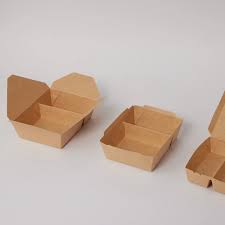
Food packaging is a recurring expense for restaurants, takeaway businesses, catering companies, and food delivery services. As order volumes increase, even small differences in the cost of individual containers can have a noticeable impact on operating budgets. Finding ways to control these expenses without compromising food safety or customer experience is therefore an important business priority.
Purchasing Paper Lunch Boxes Wholesale can help food businesses manage packaging expenses through bulk pricing, more predictable inventory, and improved purchasing efficiency. When businesses select suitable products and plan their orders carefully, wholesale packaging can contribute to long-term cost control.
1. Lower Cost Per Unit Through Bulk Purchasing
One of the most direct ways wholesale purchasing reduces packaging costs is through lower unit prices. Suppliers commonly offer volume-based pricing, allowing businesses to pay less per container when ordering larger quantities.
For restaurants with consistent takeaway demand, these savings can accumulate over time. A small reduction in the price of each lunch box may result in meaningful savings when hundreds or thousands of containers are used every month.
However, businesses should compare the total purchase cost rather than relying only on the quoted unit price. Shipping charges, taxes, storage expenses, and minimum order requirements should also be included in the calculation.
2. Fewer Frequent Purchasing Transactions
Buying packaging in small quantities often requires businesses to place orders repeatedly. Each transaction can involve administrative work, communication with suppliers, payment processing, and delivery coordination.
Wholesale purchasing can reduce the frequency of these activities. Instead of arranging multiple small orders, businesses can schedule larger purchases according to their expected consumption.
This approach saves staff time and makes purchasing operations easier to manage. It can be particularly useful for restaurant groups and catering companies that use standardized packaging across multiple locations.
3. Better Inventory Planning
An organized inventory system helps businesses avoid unnecessary packaging expenses. Wholesale orders make it possible to establish predictable stock levels based on average daily or weekly usage.
Businesses can monitor how quickly different lunch box sizes are consumed and schedule replenishment before supplies become insufficient. This reduces the need for urgent purchases, which may involve higher prices or additional delivery costs.
A simple inventory plan should consider:
- Average packaging consumption per week.
- Seasonal changes in customer demand.
- Minimum stock levels for each container size.
- Supplier production and delivery lead times.
- Available storage capacity.
With accurate usage records, businesses can order quantities that balance price advantages with practical inventory requirements.
4. Reduced Risk of Emergency Purchases
Running out of lunch boxes during a busy period can disrupt food preparation and delivery operations. Businesses may need to purchase alternative packaging at short notice, sometimes at higher prices.
Maintaining an appropriate wholesale stock reduces the likelihood of these situations. Restaurants can continue serving customers without changing packaging arrangements unexpectedly.
Catering companies may find this particularly valuable because event bookings often involve fixed meal quantities and delivery schedules. Having packaging available in advance makes preparation more predictable and reduces last-minute purchasing pressure.
5. Standardized Packaging Across Operations
Using several different packaging products for similar meals can complicate purchasing and inventory management. Standardizing lunch box designs and sizes where practical can simplify the ordering process.
When employees use familiar containers, they can also become more efficient at assembling, filling, and closing packages. This may reduce handling time during busy service periods.
Standardization can make it easier to forecast demand and negotiate larger orders for commonly used products. However, businesses should still maintain different sizes or designs when their menu requires them.
6. Choosing the Right Size to Avoid Waste
Packaging that is unnecessarily large can increase costs and consume more storage space. It may also allow food to move around during transportation, affecting presentation.
Selecting containers that match actual portion sizes helps businesses use packaging materials more efficiently. Smaller lunch boxes may suit snacks and side dishes, while larger options may be necessary for complete meals.
Businesses should review their menus and identify the most frequently used container dimensions. Testing different sizes with real food portions can help determine which options provide an appropriate balance between capacity, protection, and cost.
7. Lower Food Damage and Replacement Expenses
Packaging quality can influence the total cost of serving each order. Weak containers may bend, tear, or lose their shape during handling and transportation, potentially causing spills or damaged meals.
These problems can lead to refunds, replacement orders, wasted ingredients, and customer dissatisfaction. A slightly cheaper container may therefore become more expensive if it does not provide adequate protection.
Businesses should evaluate the strength of the base, side panels, and closure system before making a bulk purchase. Testing containers under realistic delivery conditions helps identify products that can protect meals reliably.
8. More Efficient Food Preparation
The design of a lunch box can affect how quickly employees prepare takeaway and catering orders. Containers that are easy to assemble, fill, and close can support smoother kitchen workflows.
For businesses processing large numbers of meals, small time savings across individual orders may improve overall operational efficiency. Staff can spend less time handling packaging and more time focusing on food preparation and order accuracy.
Simple folding structures and practical closure systems are worth considering when comparing wholesale products. Businesses should test samples with kitchen staff to determine whether the packaging is convenient for daily use.
9. Customization and Branding Value
Some wholesale suppliers offer customization options, including printed logos, brand colors, and other design features. Although custom printing may increase the initial packaging cost, it can provide additional value by making containers part of a business’s branding strategy.
Branded lunch boxes help create a consistent appearance across takeaway, delivery, and catering services. They can also make a business more recognizable when customers carry meals to workplaces, schools, or events.
Businesses should compare the cost of customized and standard packaging before placing an order. The decision should consider minimum quantities, printing charges, design requirements, and the expected benefits of consistent branding.
10. Reduced Packaging Waste Through Better Product Selection
Using suitable packaging can help businesses avoid unnecessary material consumption. Containers that match meal sizes and food requirements reduce the need for oversized boxes or additional protective materials.
Paper lunch boxes may also support packaging strategies that prioritize paper-based materials. However, businesses should check the product’s actual composition rather than assuming every paper container is recyclable or compostable.
Coatings, adhesives, inks, and food contamination can affect disposal options. Selecting products with clear material specifications helps businesses make more informed purchasing decisions and avoid packaging that does not match their waste-management arrangements.
11. Comparing Suppliers to Improve Purchasing Value
Wholesale prices and product specifications can vary between suppliers. Comparing several providers helps businesses understand whether they are receiving competitive value for their packaging budget.
Important factors to review include:
- Unit pricing at different order quantities.
- Paper quality and structural strength.
- Available sizes and compartment designs.
- Moisture and grease resistance.
- Custom printing charges.
- Delivery fees and estimated lead times.
- Product samples and quality-control procedures.
Businesses should also consider supplier communication and the ability to maintain consistent specifications across repeat orders. A dependable supplier can help prevent costly disruptions caused by delayed deliveries or inconsistent products.
12. Calculating the Real Cost of Each Container
A useful way to evaluate wholesale purchasing is to calculate the total cost per usable lunch box. This provides a clearer comparison than looking at the advertised unit price alone.
The basic calculation is:
Total packaging cost per usable unit = Total purchase and delivery expenses ÷ Number of usable containers received
For example, if a business spends $500 on a shipment containing 5,000 usable lunch boxes, its average cost is $0.10 per container. If another supplier offers a lower unit price but charges more for shipping or provides fewer usable units due to damaged packaging, the final cost may be higher.
Businesses should also consider storage costs and the risk of unused stock. A large order is only financially beneficial when the packaging can be stored properly and consumed within a reasonable period.
13. Planning Wholesale Orders Around Business Demand
Ordering the right quantity is just as important as negotiating a competitive price. Businesses should use historical sales records, seasonal trends, and confirmed catering bookings to estimate future packaging requirements.
Restaurants with stable takeaway volumes may be able to purchase larger quantities at regular intervals. Businesses with fluctuating demand should maintain more flexible ordering schedules to avoid excess stock.
A reliable packaging provider such as Uchampak can help businesses review available container options and plan purchases around their operational requirements. Comparing product specifications and delivery arrangements can make wholesale ordering more predictable.
Conclusion
Wholesale paper lunch boxes can help food businesses reduce packaging costs through bulk pricing, fewer purchasing transactions, improved inventory planning, and more efficient operations. Selecting appropriate sizes and durable designs can also reduce packaging waste, food damage, and replacement expenses.
To achieve lasting savings, businesses should evaluate the complete cost of each usable container rather than focusing exclusively on the lowest unit price. By comparing suppliers, testing samples, and matching order quantities to actual demand, restaurants and catering companies can build a more cost-effective packaging strategy.