
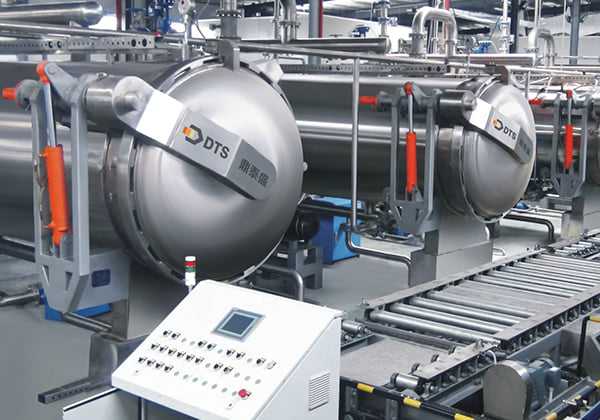
Food processing autoclaves play an important role in the production of commercially sterile, shelf-stable packaged foods. They use controlled heat and pressure to process sealed food containers, helping manufacturers achieve the required level of microbial control while maintaining product quality. From canned vegetables and meat products to ready-to-eat meals and packaged sauces, these systems support a wide range of industrial food processing applications.
Selecting suitable equipment requires more than considering chamber size or heating capacity. A well-designed Food Processing Autoclave must combine reliable pressure containment, effective heat distribution, accurate temperature control, appropriate cooling functions, and dependable safety systems. Understanding these engineering features helps manufacturers choose equipment that meets production requirements and supports consistent processing performance.
1. Pressure Vessel Design and Structural Strength
The pressure vessel is the central structure of a food processing autoclave. It must withstand the temperatures and pressures associated with the intended thermal processing applications.
Important engineering considerations include:
- Material selection: The chamber material should provide suitable strength, corrosion resistance, and compatibility with food processing environments.
- Wall thickness: Vessel dimensions and material properties must be considered when determining the required structural thickness.
- Weld quality: Welding procedures and inspections are important for maintaining vessel integrity.
- Door construction: The door and locking arrangement must provide a reliable pressure-resistant seal.
- Corrosion protection: Surfaces exposed to water, steam, and cleaning chemicals should be suitable for the operating environment.
Pressure vessels should be designed, manufactured, inspected, and tested according to applicable pressure equipment standards and regulations.
2. Accurate Temperature Control
Temperature control is one of the most important factors affecting thermal processing performance.
An autoclave must reach and maintain the specified processing temperature throughout the required stages of a cycle. Temperature variations can influence microbial inactivation and product quality.
Important temperature control features include:
- Accurate temperature sensors
- Reliable heating equipment
- Programmable temperature settings
- Automatic control functions
- Temperature alarms
- Continuous process monitoring
- Appropriate recording systems
Sensor positioning also matters. Measurements should represent the conditions within the processing chamber and be suitable for the intended validation procedures.
Regular calibration helps ensure that recorded temperatures remain reliable.
3. Effective Heat Distribution
A processing chamber must distribute heat consistently across the product load.
Poor heat distribution can create areas that heat more slowly than others, potentially affecting the effectiveness of the scheduled process.
Different autoclave designs use different heating and circulation arrangements.
Steam-Based Heating
Steam retorts use steam as the primary heating medium. Their performance depends on proper steam supply, air removal, circulation, and control of operating conditions.
Water Spray Heating
Water spray retorts circulate heated water through spray nozzles positioned inside the chamber. This arrangement can provide controlled heat distribution and is suitable for various compatible packaging formats.
Water Immersion Heating
Water immersion systems use heated water surrounding the product containers. Their design must provide suitable water circulation and temperature control throughout the load.
The appropriate system depends on product characteristics, packaging materials, processing requirements, and production capacity.
4. Reliable Pressure Regulation
Pressure management is essential because food containers can experience internal and external pressure changes during heating and cooling.
The required pressure conditions depend on the packaging material, container dimensions, product characteristics, and processing method.
Important pressure control components may include:
- Pressure transmitters
- Control valves
- Compressed air supply systems
- Pressure relief devices
- Automated pressure regulation
- Pressure monitoring and alarms
Flexible pouches and certain plastic containers may require particularly careful pressure management to reduce the risk of deformation or seal damage.
Pressure should be controlled according to the validated processing procedure rather than adjusted independently of the product and packaging requirements.
5. Heating System Capacity and Efficiency
The heating system determines how effectively the autoclave reaches the required processing temperature.
Depending on the design, heat may be supplied through direct steam injection, steam heating through a heat exchanger, or another engineered heating arrangement.
When evaluating heating capacity, manufacturers should consider:
- Required operating temperature
- Batch size and product load
- Initial product temperature
- Heating time
- Available steam or energy supply
- Heat exchanger performance, where applicable
- Expected production cycle frequency
An appropriately sized heating system can help reduce unnecessary delays while maintaining the conditions required for the scheduled process.
6. Water Circulation and Spray Distribution
For water spray autoclaves, circulation performance directly affects heat transfer.
The circulation pump moves heated water through the distribution network, while spray nozzles deliver it across the product load.
Important design features include:
Pump capacity: The pump should provide adequate flow under the system’s operating conditions.
Nozzle arrangement: Nozzles should be positioned to provide suitable coverage throughout the chamber.
Pipe design: Piping dimensions and layout influence flow resistance and circulation performance.
Filtration and cleaning: Suitable arrangements help prevent deposits or foreign material from affecting nozzle operation.
Maintenance access: Pumps, valves, and nozzles should be accessible for inspection and servicing.
Manufacturers should evaluate spray distribution under representative loading conditions rather than assuming that chamber temperature alone proves uniform heat transfer.
7. Cooling System Design
Cooling is a critical stage of the thermal processing cycle.
After the required heating and holding stages, products must be cooled under controlled conditions. The cooling arrangement should meet the needs of the food product and its packaging.
Important cooling system features may include:
- Controlled cooling water supply
- Suitable circulation or distribution arrangements
- Temperature monitoring
- Pressure regulation during cooling
- Drainage and water management
- Automatic cycle control
For glass jars and certain rigid containers, gradual temperature changes may help reduce thermal shock. Flexible packaging may require pressure support during cooling to protect seals and package shape.
Cooling conditions should be established as part of the complete processing procedure.
8. Automation and Process Control Systems
Modern food processing autoclaves commonly use programmable control systems to manage processing stages and monitor operating conditions.
Automation can help reduce manual operating variation and make production procedures easier to repeat.
Common functions include:
- Recipe selection for approved products
- Automatic heating control
- Processing time management
- Pressure monitoring and regulation
- Cooling stage control
- Alarm and fault notifications
- Batch data recording
- Cycle status monitoring
The control system should restrict unauthorized recipe changes where appropriate and maintain clear production records.
Automation supports process consistency, but it does not replace thermal process validation or trained operator supervision.
9. Safety Devices and Operator Protection
Because autoclaves operate under pressure and at elevated temperatures, safety engineering must be included from the beginning of equipment design.
Important safety features include:
- Pressure relief valves
- Temperature and pressure alarms
- Door interlocking systems
- Emergency stop controls
- Pressure monitoring instruments
- Safe drainage arrangements
- Electrical protection
- Appropriate insulation and guarding
Door interlocks are particularly important because they help prevent opening the chamber while hazardous pressure conditions remain.
Safety devices should be inspected and tested according to the manufacturer’s instructions and applicable regulations.
10. Compatibility With Different Food Packaging
Food manufacturers may process products in several packaging formats, and each format has specific thermal and mechanical characteristics.
Common examples include:
Metal Cans
Metal cans are widely used for vegetables, fruits, seafood, and meat products. Their dimensions, seam quality, and loading arrangement should be considered when selecting equipment.
Glass Jars
Glass containers require suitable heating and cooling conditions to manage temperature changes and reduce the risk of breakage.
Retort Pouches
Flexible pouches require appropriate support, spacing, and pressure management during processing.
Heat-Resistant Plastic Containers
Plastic trays and containers must be specifically designed for retort processing and compatible with the intended time-temperature-pressure conditions.
Not every autoclave is suitable for every packaging format. Compatibility should be confirmed with the equipment manufacturer and packaging supplier.
11. Chamber Capacity and Production Requirements
The autoclave’s capacity should match the manufacturer’s production volume and expected operating schedule.
An oversized system may increase equipment and utility costs, while an undersized unit can restrict production output.
Capacity planning should consider:
- Daily production targets
- Number of batches per shift
- Container dimensions
- Basket and loading arrangements
- Heating and cooling cycle duration
- Loading and unloading time
- Future production expansion
Manufacturers should evaluate actual usable loading capacity rather than relying only on the chamber’s total internal volume.
12. Hygiene, Cleaning, and Maintenance
Food processing equipment must support hygienic operation and routine maintenance.
Autoclave design should minimize areas where product residues, deposits, or stagnant water can accumulate.
Important considerations include:
- Smooth, suitable internal surfaces
- Accessible inspection points
- Effective drainage
- Cleanable spray nozzles and piping
- Reliable seals and valves
- Accessible pumps and sensors
- Suitable cleaning procedures
A preventive maintenance program should cover mechanical components, pressure instruments, temperature sensors, control systems, heating equipment, and safety devices.
Regular maintenance can help reduce unexpected downtime and support reliable operating conditions.
13. Process Validation and Documentation
Engineering features provide the foundation for reliable operation, but they must be supported by scientifically established processing procedures.
Thermal process validation evaluates whether the equipment and scheduled process consistently deliver the required treatment under defined conditions.
Important activities may include:
- Temperature distribution testing
- Heat penetration studies
- Evaluation of representative product loads
- Verification of processing parameters
- Sensor calibration
- Review of cycle records
- Documentation of approved operating procedures
For low-acid shelf-stable foods, manufacturers must follow applicable food safety regulations and use scientifically established scheduled processes.
Each product and packaging combination may require a different process, even when the same autoclave is used.
14. How to Choose the Right Food Processing Autoclave
Before purchasing equipment, manufacturers should prepare a clear technical specification based on their production requirements.
A practical selection process should include the following steps:
- Identify the products: Determine the food categories, formulations, and product characteristics to be processed.
- Confirm packaging formats: List container materials, dimensions, and sealing requirements.
- Estimate production capacity: Calculate batch sizes and expected daily output.
- Select the heating method: Compare steam, water spray, and immersion systems according to application needs.
- Review pressure requirements: Confirm the pressure control capabilities needed for the selected packaging.
- Evaluate automation: Check recipe management, monitoring, alarms, and batch recording functions.
- Assess safety and compliance: Verify applicable pressure vessel standards and food processing requirements.
- Consider long-term support: Review maintenance access, spare parts availability, technical assistance, and operating costs.
Discussing these details with an experienced equipment supplier can help prevent mismatches between machine specifications and actual production needs.
Conclusion
Food processing autoclaves combine pressure vessel engineering, temperature regulation, heat distribution, pressure control, cooling, and automation to support commercial thermal processing. Each of these features contributes to the equipment’s overall performance, safety, and suitability for industrial food production.
Manufacturers should evaluate the complete system rather than focusing on a single specification such as chamber capacity or maximum operating temperature. By considering product characteristics, packaging compatibility, process validation, safety requirements, and maintenance needs, food businesses can select an autoclave that supports efficient production and consistent processing performance.


