
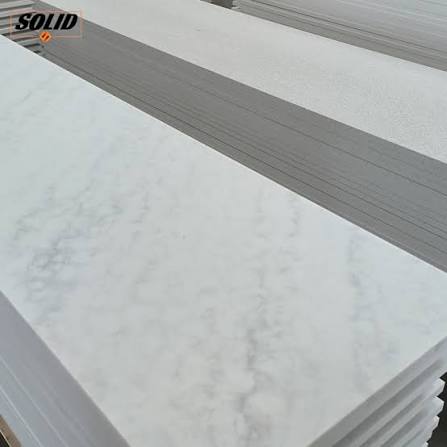
Modern architecture and interior design are constantly evolving. Architects, interior designers, furniture manufacturers, and property developers increasingly seek materials that combine visual appeal, practical functionality, customization, and consistent quality. Solid surface materials have become an important option in this changing environment because they can be fabricated into different shapes, colors, and finishes for a wide range of applications.
China’s solid surface industry is responding to these changing expectations through improvements in manufacturing technology, product development, customization, and quality management. Manufacturers serving the international market, including businesses sourcing Solid Surfaces China, are offering solutions that address contemporary requirements in residential, commercial, hospitality, and healthcare interiors. Understanding these developments helps buyers recognize how the industry is adapting to modern design trends.
1. Greater Focus on Minimalist Interior Designs
Minimalism has become a major influence in contemporary interior architecture. Many designers prefer uncluttered spaces, simple forms, neutral color schemes, and materials that create a consistent visual appearance.
Solid surface materials support these design preferences through their smooth finishes and fabrication flexibility. They can be used for countertops, wall panels, reception desks, and bathroom installations that complement clean architectural lines.
Chinese manufacturers are responding by offering product collections featuring:
- Pure white and soft neutral colors
- Subtle gray and beige tones
- Minimal decorative patterns
- Smooth matte finishes
- Simple integrated countertop designs
- Coordinated surface and basin combinations
These options allow designers to create interiors that emphasize proportion, light, and material continuity rather than excessive decoration.
2. Development of More Natural-Looking Patterns
Although minimalist designs remain popular, many projects also incorporate natural stone-inspired surfaces. Marble-like veins, granite-style textures, and subtle mineral patterns provide decorative interest while maintaining the fabrication possibilities of solid surface materials.
Manufacturers are developing more varied color and pattern options to meet these preferences.
Common design directions include:
- Fine marble-style veining
- Soft stone-inspired textures
- Speckled decorative patterns
- Warm natural colors
- Contrasting mineral effects
- Contemporary monochromatic finishes
Producing consistent decorative patterns requires careful control of pigments, material mixing, and manufacturing processes. Buyers should examine physical samples because digital images may not accurately represent the final pattern or color.
3. More Advanced Customization Capabilities
Modern interior projects frequently require products designed around specific layouts rather than standard dimensions. This has increased demand for customized solid surface components.
Chinese manufacturers are adapting by providing more flexible production arrangements and fabrication options.
Customization may include:
- Special sheet dimensions
- Project-specific colors
- Curved countertops
- Customized reception desks
- Integrated sinks and basins
- Decorative wall installations
- Special edge profiles
- Custom furniture components
These capabilities are particularly valuable in hospitality, retail, and residential projects where distinctive designs help create a consistent interior identity.
However, customized manufacturing may require additional development time, tooling, and production costs. Buyers should provide detailed drawings and technical requirements before requesting quotations.
4. Integration of Sinks and Countertops
A growing design preference is the use of integrated sinks and countertops that create a coordinated appearance. This approach can reduce visible transitions between separate components and support a more unified interior design.
Solid surface materials are suitable for certain integrated configurations because they can be cut, bonded, shaped, and finished according to project requirements.
Common applications include:
- Bathroom vanity tops
- Integrated washbasins
- Hotel bathroom counters
- Commercial washroom installations
- Healthcare work surfaces
- Customized kitchen components
Chinese manufacturers are expanding their offerings in this category by developing different basin shapes, countertop configurations, and finished components.
Quality evaluation should focus on joint appearance, bonding, surface consistency, dimensional accuracy, and suitability for the intended installation.
5. Adoption of Modern Manufacturing Technology
Technology plays an important role in helping manufacturers respond to increasingly complex design specifications. Modern production equipment can improve accuracy, consistency, and efficiency throughout the manufacturing process.
Manufacturing improvements may involve automated material measurement, controlled mixing, precision cutting, advanced polishing equipment, and more organized inspection systems.
Digital design and computer-controlled fabrication can also help manufacturers produce components with specific shapes and dimensions.
These developments support:
- More accurate cutting
- Consistent product dimensions
- Improved surface finishing
- Better repeatability
- More efficient customized production
- Reduced material waste
The effectiveness of these technologies depends on proper equipment maintenance, operator training, and production management. Buyers should evaluate actual manufacturing capabilities instead of relying solely on general claims about automation.
6. Growing Demand for Curved and Sculptural Elements
Contemporary interior design increasingly incorporates rounded furniture, curved counters, sculptural reception desks, and flowing architectural forms. These elements can soften interior spaces and create distinctive visual features.
Solid surface materials offer fabrication possibilities that support certain curved and shaped designs.
Applications include:
- Curved reception counters
- Rounded bathroom vanities
- Decorative wall features
- Sculptural furniture
- Custom retail displays
- Integrated architectural details
Chinese manufacturers are responding to these requirements by offering specialized fabrication and shaping services.
The feasibility of a curved design depends on material formulation, thickness, fabrication techniques, and the required radius. Designers should coordinate with manufacturers during the early planning stage to confirm technical limitations.
7. Emphasis on Seamless Visual Continuity
Modern interiors often prioritize visual continuity across countertops, walls, furniture, and other architectural elements. Solid surface materials can support this approach because appropriately fabricated sections can be joined to create less noticeable seams.
This characteristic is useful in large counters, reception areas, vanity installations, and customized furniture.
Achieving a consistent appearance requires skilled fabrication and careful attention to:
- Joint preparation
- Adhesive selection
- Color matching
- Sanding procedures
- Surface polishing
- Installation accuracy
The final result depends heavily on workmanship. Even suitable materials can produce visible imperfections if fabrication and installation are not performed correctly.
Chinese manufacturers that provide technical fabrication guidance and consistent production standards can help buyers meet these design expectations.
8. Expansion of Color and Finish Collections
Color selection has become an important part of interior design planning. Designers often coordinate surface materials with cabinetry, flooring, lighting, furniture, and wall finishes.
To meet these requirements, manufacturers are developing broader color collections and different surface appearances.
Popular options include:
- Warm white
- Cool white
- Light gray
- Charcoal
- Beige
- Cream
- Marble-inspired designs
- Fine-speckled finishes
Matte and polished finishes can also create different visual effects. Matte surfaces often suit understated interiors, while polished finishes may be selected when a brighter appearance is preferred.
Buyers should request physical samples and confirm whether the selected finish is available for the required product thickness and dimensions.
9. Adaptation to Small-Space Design Requirements
Urban residential developments often include compact kitchens, bathrooms, and multifunctional living spaces. These environments require materials that can be adapted to limited dimensions without compromising the overall design.
Solid surface materials can be fabricated into customized countertops, narrow vanity tops, compact washbasins, and storage-related components.
Chinese suppliers are addressing these requirements through flexible sizing and customized production options.
For small-space projects, useful design considerations include:
- Compact countertop dimensions
- Space-efficient basin configurations
- Rounded edges
- Integrated components
- Coordinated colors
- Simplified installation details
Careful planning helps reduce unnecessary material consumption while making better use of available interior space.
10. More Attention to Hygiene and Easy Maintenance
Modern design requirements are not limited to appearance. Building owners and facility managers also consider cleaning routines, maintenance costs, and long-term usability.
Solid surface products are available in formulations with nonporous surface characteristics, although specific performance depends on the material and manufacturing process. Suitable products may be considered for bathrooms, healthcare interiors, laboratories, and commercial facilities.
Manufacturers are responding to these expectations by providing technical information about cleaning, maintenance, and surface performance.
Important evaluation areas include:
- Stain resistance
- Chemical resistance
- Surface durability
- Cleaning compatibility
- Water absorption
- Repair and refinishing procedures
Buyers should follow the manufacturer’s maintenance instructions and verify that the material is compatible with the cleaning products used in the intended environment.
11. Increasing Interest in Sustainable Production
Environmental considerations are becoming more important in construction and interior material selection. Architects, developers, and procurement teams may evaluate how products are manufactured, what materials they contain, and how production waste is managed.
China’s solid surface industry is adapting to these expectations through areas of potential improvement such as:
- More efficient material utilization
- Production waste reduction
- Improved energy management
- Better packaging practices
- Responsible raw material sourcing
- Longer product service life through appropriate maintenance
However, environmental performance should be supported by measurable evidence. Buyers should request relevant documentation, product composition details, and applicable certifications rather than relying on broad sustainability statements.
12. Development of Commercial and Hospitality Applications
Commercial environments often require materials that support a consistent brand identity while meeting practical operational requirements. Hotels, restaurants, retail stores, offices, and entertainment venues use customized interior components to create recognizable spaces.
Solid surface materials can be incorporated into:
- Hotel reception counters
- Restaurant service areas
- Retail display units
- Office workstations
- Bar counters
- Commercial washrooms
- Decorative wall installations
Chinese manufacturers are adapting their product ranges to support these applications through customized dimensions, colors, shapes, and finished components.
For large commercial projects, production consistency and reliable delivery schedules are particularly important. Manufacturers should be able to maintain approved specifications across multiple production batches.
13. Better Coordination Between Design and Fabrication
A major challenge in customized interior projects is translating architectural concepts into manufacturable products. Designs that look attractive in digital renderings may require technical adjustments before production.
Closer coordination between designers, fabricators, and manufacturers can help address these issues early.
An effective process generally involves:
- Sharing design drawings and project dimensions.
- Reviewing material suitability.
- Confirming thickness and fabrication requirements.
- Developing samples or prototypes.
- Approving colors and surface finishes.
- Confirming production specifications.
- Coordinating delivery and installation requirements.
This approach helps reduce misunderstandings and limits the risk of costly changes during manufacturing or installation.
14. Improving Quality Consistency for International Projects
As Chinese manufacturers serve customers in more international markets, consistent product quality has become increasingly important. Buyers expect materials to match approved samples and technical specifications across repeat orders.
Manufacturers can support consistency through documented production procedures, raw material inspections, dimensional checks, and finished-product evaluations.
Important quality control areas include:
- Raw material verification
- Mixing and molding control
- Thickness measurement
- Surface appearance inspection
- Color consistency
- Physical performance testing
- Final packaging checks
For international projects, buyers should request relevant test reports and agree on acceptance criteria before production begins.
Independent inspections may also be useful for large or high-value orders.
15. Responding to Different Regional Design Preferences
Global design requirements are not identical. Different regions have their own preferences regarding colors, finishes, room layouts, building practices, and interior materials.
For example, some markets may prefer bright neutral surfaces, while others may show stronger demand for darker tones or decorative stone-inspired patterns.
Chinese manufacturers serving international buyers need to understand these variations and provide suitable product options.
Regional adaptation may involve:
- Developing market-specific color collections
- Adjusting product dimensions
- Offering different countertop configurations
- Supporting local fabrication requirements
- Preparing relevant technical documentation
- Understanding destination-market regulations
This flexibility can help manufacturers serve distributors and project developers with different customer bases.
16. The Role of Digital Tools in Product Development
Digital tools are influencing how solid surface products are designed, specified, and manufactured. Computer-aided design software allows designers to develop detailed drawings and communicate dimensions more accurately.
Digital modeling can also help manufacturers assess complex shapes and identify potential fabrication problems before production begins.
Useful applications include:
- Three-dimensional product modeling
- Digital cutting plans
- Customized component design
- Material estimation
- Technical drawing coordination
- Production planning
These tools can improve communication between international buyers and Chinese manufacturers, particularly when projects involve customized countertops, integrated sinks, or complex architectural elements.
17. Future Trends in China’s Solid Surface Industry
The industry is likely to continue adapting as interior design preferences and construction technologies develop. Future product innovation may focus on improved fabrication, expanded design collections, customized architectural components, and more efficient manufacturing systems.
Several developments may influence the industry’s direction:
More sophisticated decorative patterns: Manufacturers may continue expanding natural stone-inspired and customized surface designs.
Advanced fabrication methods: Improved equipment may support more detailed shapes and complex components.
Integrated interior products: Demand for coordinated countertops, sinks, and furniture components may encourage further product development.
Greater emphasis on verified performance: International buyers may increasingly expect detailed technical specifications and reliable test documentation.
Resource-efficient production: Manufacturers may invest in processes that reduce waste and improve operational efficiency.
The companies best positioned to respond will be those that connect design innovation with reliable production and consistent product quality.
Conclusion
China’s solid surface industry is adapting to modern design requirements through expanded customization, improved manufacturing technology, broader color collections, integrated products, and more flexible fabrication capabilities. These developments are helping manufacturers serve changing expectations across residential, commercial, hospitality, and healthcare environments.
However, successful product development requires more than attractive designs. Material composition, technical performance, production consistency, and installation requirements remain essential considerations.
For architects, contractors, importers, and distributors, understanding these industry developments makes it easier to identify suitable products and manufacturing partners. As contemporary interior design continues to evolve, Chinese solid surface manufacturers that combine creative flexibility with dependable quality and efficient production will remain important participants in the global market.


