Introduction
Solid surface materials are widely used in residential, commercial, and hospitality interiors because they offer design flexibility and can be fabricated into different shapes and configurations. From kitchen countertops and bathroom vanities to reception desks and decorative wall panels, these products serve a variety of functional and aesthetic purposes. However, their prices can vary considerably depending on material specifications, manufacturing methods, customization, and project requirements.
Understanding the factors behind the cost of KingKonree Solid Surface products can help homeowners, architects, contractors, and procurement managers plan their budgets more effectively. Rather than comparing materials based only on their initial price, buyers should consider the complete cost of purchasing, fabricating, installing, and maintaining the finished surface.
1. Raw Material Composition
The composition of a solid surface product is one of the main factors affecting its manufacturing cost. Many products are made using combinations of mineral fillers, polymer resins, pigments, and other additives. The quality and proportion of these ingredients can influence both production expenses and finished material characteristics.
Mineral Fillers
Mineral fillers contribute to the physical properties and appearance of solid surface materials. Their type, quality, and processing requirements can affect the overall production cost.
Resin Quality
The resin system binds the material components together. Different formulations may have different costs and processing requirements, which can influence the final product price.
Additives and Pigments
Special pigments and additives may be required to achieve particular colors, patterns, or performance characteristics. Products with more complex formulations may involve additional material and manufacturing expenses.
Buyers should review the technical specifications rather than assuming that products with similar appearances have identical compositions.
2. Product Thickness and Dimensions
The size and thickness of a solid surface sheet directly influence how much material is required for manufacturing.
Thickness Options
Thicker sheets generally require more raw material than thinner alternatives, which may increase their production cost. However, the appropriate thickness depends on the intended application, design, and structural support.
Sheet Dimensions
Large sheets can be useful for projects requiring extended countertops or fewer visible joints. Their cost depends on material consumption, production capabilities, and transportation requirements.
Custom Dimensions
Standard sheet sizes may be more economical because they fit established manufacturing processes. Custom dimensions can involve additional production planning and may increase the final price.
Before ordering, buyers should compare available sizes with their project drawings to minimize unnecessary material waste.
3. Color, Pattern, and Surface Finish
Appearance is an important consideration when selecting solid surface materials. Different colors, patterns, and finishes may involve different manufacturing requirements.
Standard Colors
Common colors and established product designs may be more readily available. Their production can benefit from regular manufacturing schedules and standardized processes.
Custom Colors
Special color requirements may involve additional pigment selection, formulation adjustments, and sample approvals. Smaller custom orders may also have higher costs per unit.
Decorative Patterns
Some products feature stone-like patterns, visual variations, or other decorative effects. Achieving a consistent appearance may require more specialized production controls.
Surface Finishes
Matte, satin, and glossy finishes may involve different finishing procedures. The selected finish can influence production time and the final price.
Buyers should request physical samples when appearance is important, since digital images may not accurately represent the color and texture of the finished material.
4. Manufacturing Technology and Production Processes
Manufacturing equipment and production methods can have a significant effect on product cost.
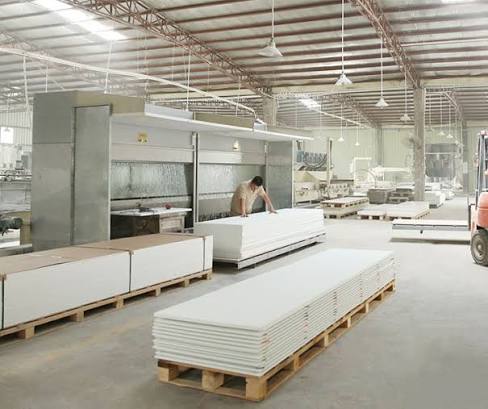
Solid surface manufacturing may involve material preparation, mixing, forming, curing, trimming, sanding, and finishing. Each stage requires equipment, labor, energy, and quality inspections.
Equipment Requirements
Modern production equipment may improve dimensional consistency and process control. However, machinery investment, maintenance, and operating expenses contribute to manufacturing costs.
Production Efficiency
Efficient production planning can reduce waste and improve output. Manufacturers may achieve different cost structures depending on their equipment, production volume, and operating procedures.
Quality Inspection
Inspection activities help identify defects and verify that products meet established specifications. Testing and quality assurance require resources, but they can reduce the risk of delivering unsuitable materials.
The manufacturing process should therefore be evaluated as part of the overall product value rather than viewed only as an expense.
5. Customization and Fabrication Requirements
Customization is another important factor influencing the total cost of solid surface products. Standard sheets generally require less specialized work than finished components designed for a particular space.
Curved Components
Curved reception counters, rounded vanity tops, and other customized shapes may require specialized fabrication techniques and additional labor.
Integrated Washbasins
Some solid surface products can be fabricated into integrated countertop and basin designs. These components may involve more detailed shaping, joining, and finishing than standard flat sheets.
Special Edge Profiles
Decorative edges, rounded corners, and customized profiles require additional machining and finishing operations.
Cutouts and Openings
Cutouts for sinks, faucets, appliances, and other fixtures must be accurately measured and fabricated. Complex layouts may increase labor and material costs.
Buyers should provide detailed drawings and measurements when requesting quotations for customized components.
6. Order Quantity and Bulk Purchasing
The number of sheets or finished components ordered can influence the price per unit.
Small Orders
Small orders may involve higher per-unit costs because manufacturers still need to account for setup, preparation, inspection, and administrative activities.
Bulk Orders
Larger orders may benefit from production efficiencies and more economical packaging or shipping arrangements. However, discounts depend on the supplier’s pricing policy, product availability, and order specifications.
Repeat Orders
Projects that require repeated purchases may benefit from standardized specifications and planned production schedules. Maintaining consistent product selections can also simplify procurement.
Buyers should request quotations for different quantities to understand how order size affects pricing.
7. Quality Standards and Testing Requirements
Quality requirements can influence the price of solid surface products. Materials intended for specific applications may need additional testing, documentation, or production controls.
Dimensional Accuracy
Products with tighter dimensional requirements may require more frequent measurements and inspection procedures.
Performance Testing
Depending on the intended application, buyers may request information about resistance to stains, heat, moisture, impact, or cleaning chemicals.
Documentation
Technical data sheets, test reports, and other product documentation help buyers evaluate suitability. Additional testing or third-party verification may increase procurement costs.
It is important to distinguish between a manufacturer’s general quality management system and certifications or test results that apply to a particular product.
8. Labor and Skilled Fabrication Costs
Labor is a significant part of the total cost when solid surface materials are supplied as finished components rather than unfinished sheets.
Cutting and Shaping
Accurate cutting requires suitable equipment and trained operators. Complex shapes and detailed layouts may require more time than standard rectangular components.
Joining and Finishing
Some installations require several pieces to be joined together. Proper surface preparation, adhesive application, sanding, and polishing contribute to fabrication costs.
Inspection and Rework
Finished components may need additional checks before delivery. If measurements or surface quality do not meet the agreed requirements, corrective work can increase production expenses.
Selecting experienced fabricators can help reduce measurement errors, material waste, and installation complications.
9. Transportation and Packaging Expenses
Shipping costs can represent a substantial portion of the total purchase price, especially when materials are transported internationally or delivered to remote construction sites.
Packaging Requirements
Solid surface sheets need suitable protection against scratches, impacts, and handling damage. Protective films, separators, edge guards, and secure packaging contribute to the delivery cost.
Shipping Distance
Longer transportation routes generally involve higher freight expenses. The final amount depends on the shipment size, destination, transportation method, and applicable logistics charges.
Order Weight and Volume
Large or heavy shipments may require specialized handling and transportation arrangements. Buyers should consider both the weight and dimensions of the packaged products.
Import Duties and Taxes
International buyers may need to account for customs duties, taxes, brokerage fees, and other local charges. These expenses vary by destination and product classification.
A complete quotation should clearly identify which transportation and import-related expenses are included.
10. Installation and Project Preparation
The purchase price of solid surface material does not represent the complete cost of a finished installation. Site preparation and installation labor can significantly influence the project budget.
Surface and Cabinet Preparation
Countertops and vanity tops require suitable supporting structures. Cabinets and installation areas should be properly measured and prepared before the material arrives.
Plumbing and Electrical Coordination
Installations involving sinks, faucets, appliances, or electrical equipment may require coordination with other contractors.
Installation Complexity
Large countertops, curved components, and designs with multiple joints may require additional labor and specialized tools.
Site Accessibility
Difficult access, limited working space, and delivery restrictions can increase handling and installation expenses.
Planning these details early can help reduce unexpected costs during construction.
11. Supplier Location and Business Structure
The location and operating structure of a supplier can influence the final quotation.
Manufacturers, distributors, fabricators, and local retailers may offer different pricing arrangements.
Direct Manufacturer Purchasing
Purchasing directly from a manufacturer may reduce certain intermediary costs. It can also provide buyers with more direct access to product specifications and production information.
Distributor Purchasing
Distributors may provide local inventory, smaller order quantities, and regional customer support. Their pricing may include warehousing, handling, and distribution expenses.
Local Fabrication Services
Local fabricators can simplify measurement, customization, and installation coordination. Their service costs should be considered alongside the material purchase price.
The most economical option depends on the project’s quantity, location, customization needs, and required level of support.
12. Market Conditions and Raw Material Price Changes
Solid surface manufacturing depends on raw materials, energy, labor, and transportation. Changes in these areas can influence supplier pricing over time.
Material Availability
Supply disruptions or changes in the availability of resins, minerals, and pigments may affect production expenses.
Energy Costs
Manufacturing equipment, curing processes, and finishing operations consume energy. Changes in electricity and fuel prices can influence operating costs.
Currency Exchange Rates
International purchases may be affected by exchange rate movements between the buyer’s currency and the supplier’s pricing currency.
Transportation Market Conditions
Freight rates can change according to fuel prices, shipping capacity, demand, and international logistics conditions.
For large projects, buyers may benefit from confirming quotation validity periods and agreeing on pricing arrangements before production begins.
13. Maintenance and Long-Term Ownership Costs
A material’s initial price should be considered alongside the cost of maintaining it throughout its service life.
Many solid surface products can be cleaned with suitable mild detergents and soft cloths. Some formulations also allow minor scratches to be repaired through appropriate refinishing techniques.
However, maintenance requirements differ between products and finishes.
Routine Cleaning
Buyers should understand which cleaning products are recommended and which chemicals should be avoided.
Surface Repairs
The availability and cost of professional repairs depend on the type of damage and the product formulation.
Replacement Planning
For commercial properties and large residential developments, retaining product details and spare material can make future repairs or replacements easier.
Evaluating these factors helps buyers understand the broader financial implications of their purchase.
14. How to Compare Solid Surface Quotations Effectively
Comparing quotations based only on the price per sheet can lead to inaccurate purchasing decisions. Buyers should ensure that each supplier is quoting for comparable specifications.
A useful comparison should include:
| Cost factor | What to verify |
|---|---|
| Material composition | Product type and technical specifications |
| Thickness | Exact thickness and dimensional tolerances |
| Color and finish | Standard or customized selection |
| Order quantity | Number of sheets or finished components |
| Fabrication | Cutting, shaping, joining, and finishing charges |
| Quality documentation | Available technical data and test reports |
| Packaging | Protective materials and handling arrangements |
| Transportation | Freight charges and delivery terms |
| Installation | Whether site installation is included |
| Warranty | Coverage, conditions, and limitations |
Requesting itemized quotations makes it easier to identify differences between suppliers and understand the actual project cost.
15. Practical Ways to Manage Solid Surface Project Costs
Buyers can take several steps to control expenses without compromising important product requirements.
Finalize Designs Before Ordering
Frequent design changes can lead to additional cutting, material waste, and production delays. Finalizing drawings before fabrication helps reduce these risks.
Select Standard Options Where Appropriate
Standard colors, finishes, and dimensions may be more economical than highly customized alternatives.
Optimize Cutting Layouts
Careful planning can reduce offcuts and improve material utilization, particularly in projects requiring many countertops or panels.
Confirm Quantities Accurately
Overordering increases material and storage costs, while underordering may lead to additional shipping expenses and production delays.
Evaluate the Complete Quotation
Compare material, fabrication, packaging, transportation, and installation costs together rather than focusing on one price component.
Review Technical Requirements
Avoid paying for specifications that are unnecessary for the intended application, but do not compromise essential performance or safety requirements.
Conclusion
The cost of KingKonree Solid Surface products can be influenced by raw material composition, thickness, dimensions, color, manufacturing processes, customization, order quantity, quality requirements, transportation, and installation. Market conditions and long-term maintenance considerations can also affect the overall financial value of a project.
For homeowners, contractors, architects, and commercial buyers, the best purchasing decision comes from comparing complete product specifications and itemized quotations. By planning dimensions carefully, choosing suitable finishes, confirming technical requirements, and coordinating fabrication and delivery, buyers can manage solid surface expenses more effectively while selecting materials that meet their design and functional needs.