Large events often bring together hundreds or thousands of visitors who need to find entrances, registration desks, exhibition halls, restrooms, seating areas, and other facilities. Without clear directions, attendees may become confused, miss scheduled activities, or spend unnecessary time searching for important locations. Effective signage helps create an organized environment and makes the overall visitor experience more convenient.
A strategically placed Event Wayfinding Banner provides directional information and helps attendees identify important areas throughout a venue. By combining readable text, recognizable symbols, and consistent event branding, these banners can guide visitors through unfamiliar spaces while reducing confusion at busy gathering points.
What Is an Event Wayfinding Banner?
An event wayfinding banner is a visual sign designed to help people navigate an event location. It communicates directions, identifies specific areas, and provides information that helps visitors understand where they need to go.
These banners can be used in indoor and outdoor venues, including convention centers, stadiums, exhibition halls, festivals, and conference facilities. Depending on the location, they may be mounted on walls, attached to suitable structures, or displayed using freestanding banner systems.
Unlike purely promotional banners, wayfinding displays prioritize useful information. Their design should make directions easy to recognize and understand, even when visitors are moving through crowded spaces.
Why Wayfinding Banners Matter at Large Events
Navigation becomes more challenging as venues grow in size and complexity. Multiple entrances, activity zones, and service areas can make it difficult for first-time visitors to understand the layout.
Wayfinding banners address several common challenges.
Reduce Visitor Confusion
Clear directional signs help attendees identify the correct route without repeatedly asking event staff for assistance. This is especially useful when several halls or activity areas have similar layouts.
Improve Movement Around the Venue
Well-positioned signs can guide visitors toward designated entrances, exits, and facilities. This helps distribute foot traffic and may reduce unnecessary crowding around information desks.
Save Time for Attendees
Visitors often follow a schedule involving presentations, demonstrations, meetings, or performances. Clear directions make it easier to locate the next activity and arrive on time.
Create a More Organized Environment
Consistent signage gives an event a planned and professional appearance. When directions are presented in a coordinated format, visitors can understand the venue layout more easily.
Important Locations for Event Wayfinding Banners
The effectiveness of directional signage depends heavily on where it is installed. Banners should appear at points where visitors need information to make a navigation decision.
Main Entrances and Registration Areas
The entrance is often the first place where attendees need guidance. Banners can identify registration desks, ticket collection points, visitor check-in areas, and information counters.
Clear signs at these locations help people understand what to do immediately after arriving.
Exhibition Halls and Conference Rooms
Large venues may contain several exhibition spaces, meeting rooms, and presentation areas. Directional banners can identify hall numbers, room names, and event sections.
Using consistent numbering and labels across all signs makes it easier for attendees to follow directions.
Restrooms and Essential Facilities
Visitors should be able to locate restrooms, first-aid stations, water points, and other essential facilities without difficulty. Simple text combined with recognizable symbols can communicate this information quickly.
Food and Refreshment Areas
At festivals, conferences, and exhibitions, food courts and refreshment stations may be located away from the main activity spaces. Wayfinding banners can direct attendees toward these areas while helping prevent unnecessary movement through restricted sections.
Parking Areas and Exits
Directional signs near parking facilities and venue exits can help visitors understand where to go when arriving or leaving. For large outdoor events, clear route information is particularly important.
Designing Effective Event Wayfinding Banners
A directional banner should communicate its purpose immediately. Attractive graphics are useful, but readability and consistency should remain the main priorities.
Use Clear Directional Messages
Choose short instructions that visitors can understand quickly. Messages such as “Registration,” “Hall B,” “Main Exit,” or “Restrooms” are more effective than lengthy descriptions.
Include arrows when they help clarify the direction of travel. Make sure each arrow points toward the actual route.
Choose Readable Fonts
Use simple typography with sufficient letter size and spacing. Important information should be visible from the expected viewing distance.
Avoid decorative fonts that make room names or directions difficult to recognize.
Maintain Strong Color Contrast
Text should stand out clearly against the background. A combination of contrasting colors can improve visibility in busy environments, while consistent brand colors help connect the signage to the event identity.
Use Recognizable Symbols
Common symbols can help communicate directions to visitors who speak different languages. Icons for restrooms, parking, food, and accessibility can complement written instructions.
Use familiar symbols and avoid designs that may be interpreted in different ways.
Keep the Layout Consistent
All wayfinding banners should follow a common visual system. Use consistent typography, arrow styles, colors, and naming conventions throughout the venue.
This makes it easier for visitors to recognize directional signs as they move between different areas.
Choosing the Right Banner Format and Materials
The best banner format depends on the venue layout, installation surface, and expected duration of the event.
Freestanding Banner Displays
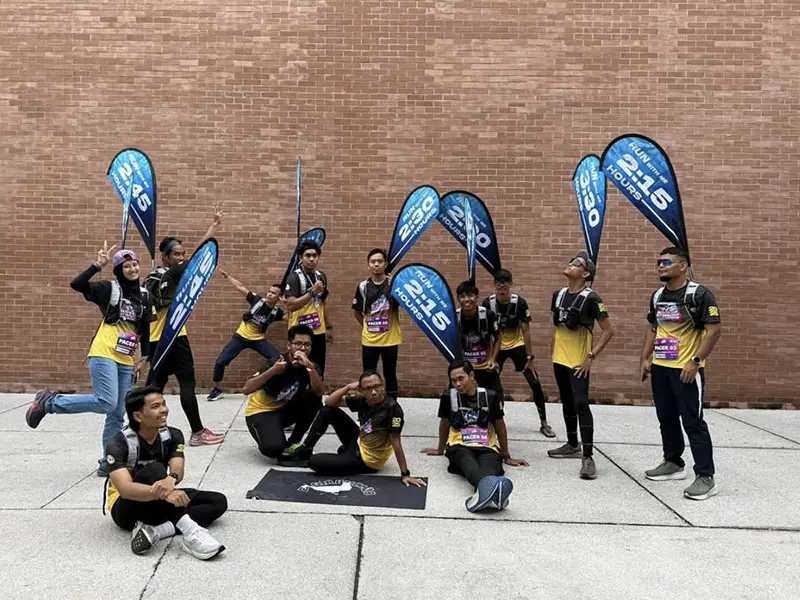
Freestanding banners can be positioned at entrances, corridors, registration areas, and other locations where wall mounting is unavailable. Portable systems are useful for temporary events because they can be moved when the layout changes.
Wall-Mounted Banners
Wall-mounted displays can communicate directions in permanent or frequently used venue areas. They are particularly useful along corridors, near stairways, and outside meeting rooms.
Outdoor Wayfinding Banners
Outdoor events may require banners that can withstand sunlight, moisture, and changing weather conditions. The material and support system should be selected according to the expected environment.
Installation should follow manufacturer guidance and local venue requirements, especially in areas exposed to wind.
Fabric and Printing Quality
Choose materials that support clear printing and suit the intended application. High-quality graphics help preserve text readability and maintain a professional appearance.
For reusable event signage, consider whether the banner can be cleaned, stored, and used again without significant damage.
Planning a Wayfinding System for a Large Venue
Individual banners are most effective when they form part of a coordinated navigation plan. Event organizers should consider the entire visitor journey rather than selecting sign locations independently.
A practical planning process includes:
- Review the venue layout: Identify entrances, exits, halls, service areas, and important decision points.
- Understand visitor routes: Consider how attendees will move between registration, activities, facilities, and departure areas.
- Identify information needs: Determine what visitors need to know at each location.
- Create a consistent sign system: Use matching labels, symbols, colors, and directional styles.
- Check sightlines: Position banners where people can see them before reaching a junction or turning point.
- Test the routes: Walk through the venue as a visitor and check whether each direction is clear.
- Update signs when necessary: Make sure temporary changes, room adjustments, and revised schedules are reflected accurately.
This approach helps prevent conflicting directions and missing information.
Common Wayfinding Mistakes to Avoid
Even attractive banners can fail if they are difficult to read or positioned incorrectly. Event organizers should avoid the following problems:
- Placing directional signs after visitors have already passed a turning point.
- Using small text that cannot be read from a distance.
- Including too much information on a single banner.
- Using arrows that point toward unclear or incorrect routes.
- Changing room names or numbering between different signs.
- Covering existing safety information or emergency signage.
- Placing displays where crowds, furniture, or equipment block visibility.
- Failing to update signs when event arrangements change.
A pre-event inspection can help identify these issues before visitors arrive.
Accessibility and Visitor Safety
Wayfinding should support all attendees, including people with mobility limitations, visual impairments, and different language backgrounds.
Use clear wording, familiar symbols, and consistent placement. Make sure directional signs identify accessible routes where relevant and do not obstruct ramps, corridors, doorways, or emergency exits.
Banners should be securely installed using support systems appropriate for their size and location. Outdoor displays require additional consideration of wind exposure and weather conditions.
Directional banners should also complement, rather than replace, official emergency and statutory safety signage.
Maintaining and Reusing Event Wayfinding Banners
Reusable banners can be a practical option for venues that host regular exhibitions, conferences, or community events. However, they should be inspected before every installation.
Check the printed surface for fading, tears, and outdated information. Examine frames, poles, mounting points, and connectors for damage. Clean and store materials according to the manufacturer’s instructions.
For recurring events, consider using replaceable graphic panels or separate inserts for information that changes frequently, such as room numbers and schedules. This can reduce the need to replace an entire display whenever the event layout changes.
Conclusion
Event wayfinding banners help visitors navigate large venues by providing clear directions, identifying important facilities, and supporting organized movement. They are useful at conferences, exhibitions, festivals, sporting events, and other gatherings where attendees may need to find their way through unfamiliar spaces.
Successful wayfinding depends on more than attractive graphics. Clear messages, consistent design, thoughtful placement, accessible routes, and reliable installation all contribute to a better visitor experience. By planning signage as part of the overall event layout, organizers can make large venues easier to understand and navigate.