
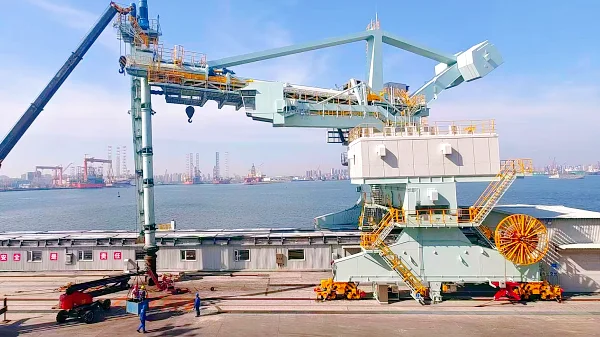
The cement industry depends on reliable bulk material transportation to maintain consistent production and meet construction market demands. Clinker, an essential intermediate material used in cement manufacturing, is frequently transported between production facilities and international ports in large quantities. Handling this material efficiently requires specialized equipment capable of managing heavy cargo volumes while minimizing material loss, dust emissions, and operational delays.
Modern Clinker Ship Unloaders provide specialized solutions for transferring clinker from cargo vessels to shore-based storage and transportation systems. With improvements in mechanical handling, automation, and dust control, these systems help cement manufacturers and port operators improve bulk cargo handling efficiency.
Understanding Clinker Handling Requirements
Clinker is produced by heating limestone, clay, and other raw materials at high temperatures in a cement kiln. After cooling, it forms hard, irregular granules that are transported to grinding facilities for further processing into cement.
Unlike some powdered bulk materials, clinker has relatively coarse particles and can be abrasive. Its physical properties create specific requirements for unloading equipment, including mechanical strength, wear resistance, and reliable material transfer.
Several challenges must be considered during clinker unloading:
- Large cargo volumes requiring consistent handling capacity.
- Abrasive particles that can accelerate equipment wear.
- Dust generation during material movement and transfer.
- High mechanical loads on conveying components.
- The need for reliable coordination with storage and transportation systems.
Understanding these characteristics helps port operators select unloading technology suited to clinker handling conditions.
How Clinker Ship Unloading Systems Work
Clinker unloading systems are designed to collect material from vessel holds and transfer it to shore-based handling facilities. Depending on the equipment configuration, unloading may involve mechanical grabbing, continuous conveying, or specialized extraction arrangements.
The collected clinker is generally directed toward receiving hoppers and conveyor systems before reaching storage areas or cement processing facilities.
A complete unloading arrangement may include lifting equipment, feeding mechanisms, enclosed conveyors, discharge points, dust control devices, and automated operating controls.
The system’s overall performance depends on how effectively these components work together.
Different Types of Clinker Ship Unloaders
Ports can use different unloading technologies depending on vessel size, cargo volume, infrastructure, and operational requirements.
Grab-Type Ship Unloaders
Grab-type unloaders use mechanical grabs to collect clinker from cargo holds. The material is lifted and discharged into a hopper connected to a conveyor system.
These machines offer flexibility when handling different bulk commodities and are commonly used in ports that serve multiple industrial sectors.
Their performance depends on grab capacity, lifting speed, operating cycles, and the efficiency of the receiving hopper arrangement.
Continuous Mechanical Unloaders
Continuous mechanical systems use conveying mechanisms to move clinker from the vessel to shore without relying entirely on repeated grabbing cycles.
Depending on the design, these systems may incorporate screw conveyors, bucket elevators, or other mechanical transfer components.
Their ability to maintain a relatively steady material flow can help improve coordination with downstream conveyors and storage facilities.
Specialized Conveyor-Based Systems
Some port installations use integrated conveyor arrangements to transfer clinker through enclosed or partially enclosed pathways.
These systems can help reduce material spillage and improve handling consistency, particularly when designed around specific vessel and terminal configurations.
Selecting the appropriate arrangement requires consideration of clinker abrasiveness, conveying distance, and required throughput.
Improving Unloading Efficiency Through Modern Technology
Technological developments are helping cement terminals improve equipment performance and reduce unnecessary operating interruptions.
Automated Operating Controls
Modern unloading equipment may incorporate programmable control systems, sensors, and automated operating functions.
These technologies help operators manage lifting movements, conveyor speeds, motor loads, and material flow.
Automated controls can also improve coordination between different equipment sections, reducing delays caused by inconsistent material transfer.
Advanced Monitoring Systems
Monitoring technology allows maintenance teams to observe important operating parameters, including motor temperature, vibration, hydraulic pressure, and equipment loading.
Identifying abnormal conditions early can help prevent unexpected breakdowns and improve maintenance planning.
Some advanced systems also support remote monitoring, allowing operators to review equipment performance without remaining physically close to every operating component.
Energy-Efficient Drive Technology
Electric motors, optimized gear systems, and variable-frequency drives can help improve energy management in large-scale unloading operations.
Adjusting motor speed according to material flow and operating requirements may reduce unnecessary energy consumption.
However, energy efficiency depends on appropriate equipment sizing, operating practices, and the design of the complete material handling system.
Dust Control and Environmental Protection During Clinker Unloading
Dust management is an important consideration in cement industry port operations. Clinker handling can release fine particles during vessel unloading, conveyor transfer, and material discharge.
Excessive dust may affect employee health, reduce visibility, contaminate nearby surfaces, and create environmental compliance challenges.
Modern unloading systems can incorporate several dust control measures:
- Enclosed conveyor sections to limit material exposure.
- Dust collection equipment at transfer points.
- Properly designed receiving hoppers.
- Sealed connections between conveying components.
- Suitable filtration and ventilation arrangements.
- Regular inspection of equipment seals and collection systems.
The most effective approach is to control dust as close as possible to the point where it is generated.
Facilities should also establish appropriate housekeeping procedures and ensure that collected material is handled safely.
Choosing the Right Clinker Ship Unloading Equipment
Selecting suitable equipment requires a detailed understanding of cargo characteristics and port operating conditions.
1. Unloading Capacity
The required unloading rate should reflect vessel cargo volumes, berth schedules, and downstream transportation capacity.
A machine with a high theoretical capacity may not achieve its full potential if receiving hoppers, conveyors, or storage facilities cannot accommodate the same material flow.
2. Equipment Durability
Clinker is abrasive, making wear resistance an important equipment selection factor.
Components such as conveyor flights, liners, chutes, buckets, and material contact surfaces should be designed to withstand continuous exposure to abrasive particles.
Durable construction can help reduce replacement frequency and maintenance interruptions.
3. Vessel Compatibility
The dimensions of cargo vessels and the configuration of their holds influence equipment reach, lifting arrangements, and unloading methods.
Ports handling different vessel sizes should evaluate the flexibility and operating range of the proposed equipment.
4. Storage and Conveyor Integration
An unloading system must connect effectively with the terminal’s existing material handling infrastructure.
Conveyors, transfer points, storage silos, and stockyards should be capable of receiving clinker at the expected unloading rate.
Proper integration helps prevent congestion and unnecessary vessel waiting time.
5. Operating and Maintenance Costs
The total cost of ownership includes initial equipment investment, energy consumption, labor, spare parts, and scheduled servicing.
Evaluating these factors together provides a more realistic understanding of long-term operating expenses.
The Importance of Preventive Maintenance
Regular maintenance is essential for maintaining clinker unloading performance. Continuous exposure to abrasive material can gradually wear mechanical components and affect conveying efficiency.
A structured maintenance program should include:
- Inspecting conveyor components and material contact surfaces for excessive wear.
- Checking bearings, motors, gearboxes, and drive assemblies.
- Monitoring vibration and operating temperatures.
- Examining hoppers and discharge chutes for material buildup.
- Inspecting dust collection systems and filtration components.
- Checking electrical controls and safety mechanisms.
- Maintaining records of inspections, repairs, and component replacements.
Preventive maintenance helps identify potential problems before they develop into costly equipment failures.
Enhancing Workplace Safety in Cement Port Operations
Clinker unloading involves heavy machinery, moving conveyors, elevated equipment, and substantial quantities of bulk material. These conditions require effective workplace safety procedures.
Modern systems may incorporate emergency stops, overload protection, access controls, safety interlocks, and monitoring devices.
Operators should also receive appropriate training in equipment operation, inspection procedures, and emergency response.
Clear communication between vessel crews, equipment operators, and terminal personnel is important for coordinating unloading activities and preventing accidents.
Future Trends in Clinker Unloading Technology
The cement industry’s focus on productivity and environmental responsibility is encouraging further development in bulk cargo handling technology.
Future systems are likely to incorporate more advanced automation, intelligent monitoring, predictive maintenance, and energy-efficient mechanical designs.
Improved dust extraction technology and better material transfer arrangements may also help reduce environmental impacts around cement terminals.
As port operations become increasingly integrated, digital monitoring platforms could provide better coordination between vessels, unloading equipment, conveyors, and storage facilities.
These developments are expected to support more reliable and efficient clinker handling operations.
Conclusion
Advanced clinker ship unloading systems are essential for maintaining efficient bulk material handling in cement industry port operations. By combining suitable mechanical conveying technology, durable components, automated controls, and effective dust management, these systems help improve cargo transfer and reduce operational challenges.
Choosing the right equipment requires careful consideration of clinker properties, unloading capacity, vessel compatibility, infrastructure requirements, and long-term maintenance costs.
With proper equipment selection, system integration, and preventive maintenance, cement terminals can establish more reliable unloading operations while supporting workplace safety and environmental management.


