Industrial facilities generate dust in many ways, from grinding and polishing to material transfer, mixing, cutting, and packaging. Although the amount of dust may vary between processes, uncontrolled particles can create similar operational challenges. They may settle on machinery, contaminate products, increase cleaning requirements, or become airborne in occupied areas. Choosing the right collection equipment helps businesses address these issues through a planned approach to dust capture and removal.
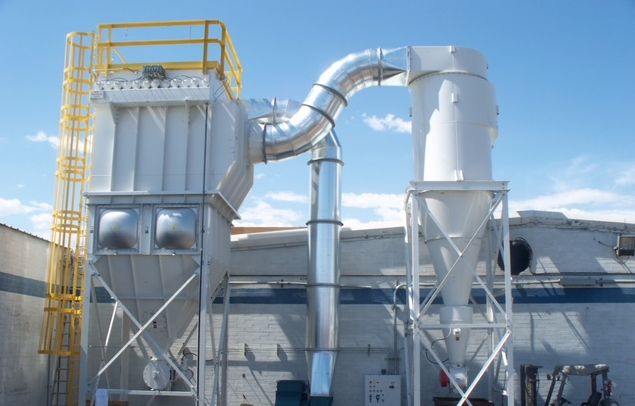
A Dust Collection Unit is equipment designed to draw in dust-laden air, separate particulate matter, and collect the removed material. Depending on the application, it may use cartridge filters, fabric bags, cyclonic separation, or another filtration arrangement. Selecting an appropriate unit requires evaluating the dust source, material properties, airflow demand, installation space, and the operating conditions of the facility.
1. Identify the Dust Sources
Begin by identifying every process that produces dust. Common sources include sanding stations, grinders, crushers, mixers, conveyors, packaging equipment, and raw-material discharge points.
Determine whether dust is released continuously or only during particular operations. Also consider whether several machines operate simultaneously.
A source-by-source assessment helps establish where extraction hoods or enclosures are required and how many collection points the system must serve. This prevents equipment selection based on assumptions that may not reflect actual production conditions.
2. Understand the Dust Characteristics
Dust properties influence the type of collection technology and filter media required.
Important factors include:
- Particle size and distribution
- Material density and abrasiveness
- Moisture content and tendency to become sticky
- Operating and particle temperatures
- Chemical composition and compatibility
- Combustibility and other potential hazards
For example, abrasive mineral dust may require wear-resistant components, while damp particles can create filter-cleaning problems. Fine combustible dust may require specialized protection and a formal hazard assessment.
Material information should be available before equipment specifications are finalized.
3. Calculate the Required Airflow
Airflow is a central design consideration because it determines how effectively dust can be captured and transported.
The required volume depends on the capture hood, machine enclosure, number of operating points, and expected production conditions. Duct dimensions, bends, branch connections, and filter resistance also influence the airflow available at each location.
A unit with a large motor is not automatically suitable. The fan must deliver the required airflow at the system’s actual operating pressure.
For facilities with several extraction points, an engineered airflow calculation helps prevent poor performance and uneven distribution.
4. Select a Suitable Filtration Technology
Different collectors use different methods to separate particles from air.
Cartridge filters provide a large filtration surface within a relatively compact housing. They are used in many industrial applications where the dust and operating conditions are compatible with the filter design.
Baghouse collectors use fabric filter bags and are often selected for larger material-handling or process applications.
Cyclone separators use rotational airflow to remove suitable larger particles. They are frequently used as pre-separation equipment to reduce the load on downstream filters.
Other technologies, including wet collection, may be appropriate for particular materials and processes.
The final choice should reflect filtration requirements, operating conditions, maintenance needs, and material hazards.
5. Consider Installation Space and Layout
The available installation area affects the size and configuration of the collection unit. Measure the space required for the collector, fan, duct connections, access platforms, and dust discharge equipment.
The location should allow maintenance personnel to inspect filters, remove collected material, and reach electrical or mechanical components safely.
Outdoor installation may introduce weather protection and environmental considerations, while indoor equipment may require attention to noise, air discharge, and available floor space.
The layout should also preserve walkways, emergency exits, and access to other production equipment.
6. Evaluate Dust Discharge and Disposal
After particles are separated from the airflow, they need to be collected and removed. Depending on the volume and material, the system may use drums, bins, hoppers, rotary valves, or enclosed conveying equipment.
The discharge arrangement should be convenient for operators and suitable for the collected material. Hazardous dust may require special containment and disposal procedures.
Overfilled containers can interfere with collection performance and create housekeeping problems, so capacity and emptying frequency should be included in the specification.
7. Assess Safety Requirements
Dust collection involves both airborne particles and mechanical equipment. Fans, moving components, electrical systems, and stored dust can introduce hazards.
Where combustible dust is possible, a qualified assessment should identify the necessary prevention and protection measures. These may involve equipment selection, explosion isolation, venting, suppression, bonding, grounding, or other safeguards depending on the hazard and applicable requirements.
The unit should also include appropriate guarding, safe access, electrical protection, and clear maintenance procedures.
8. Compare Operating and Maintenance Costs
The purchase price is only one part of the total investment. Electricity, filter replacement, spare parts, cleaning, servicing, and downtime contribute to long-term costs.
Check whether filters and other replacement components are readily available. Ask about inspection requirements, expected service intervals, technical support, and warranty conditions.
A unit that is straightforward to maintain may provide better long-term value than equipment with a lower initial price but greater servicing demands.
9. Confirm Performance After Installation
Once installed, the collection system should be checked under representative operating conditions. Airflow, pressure differential, capture performance, dust discharge, and filter operation should be assessed.
Testing can reveal problems such as poor hood positioning, duct leakage, airflow imbalance, or unsuitable operating settings. Correcting these issues early helps ensure that the system performs as intended.
Conclusion
Selecting the right dust collection unit involves matching the collection technology to the facility’s dust sources, material properties, airflow needs, layout, and safety requirements. Maintenance access and long-term operating costs are equally important. A properly specified and tested system can help control industrial dust and support cleaner, more organized production environments.