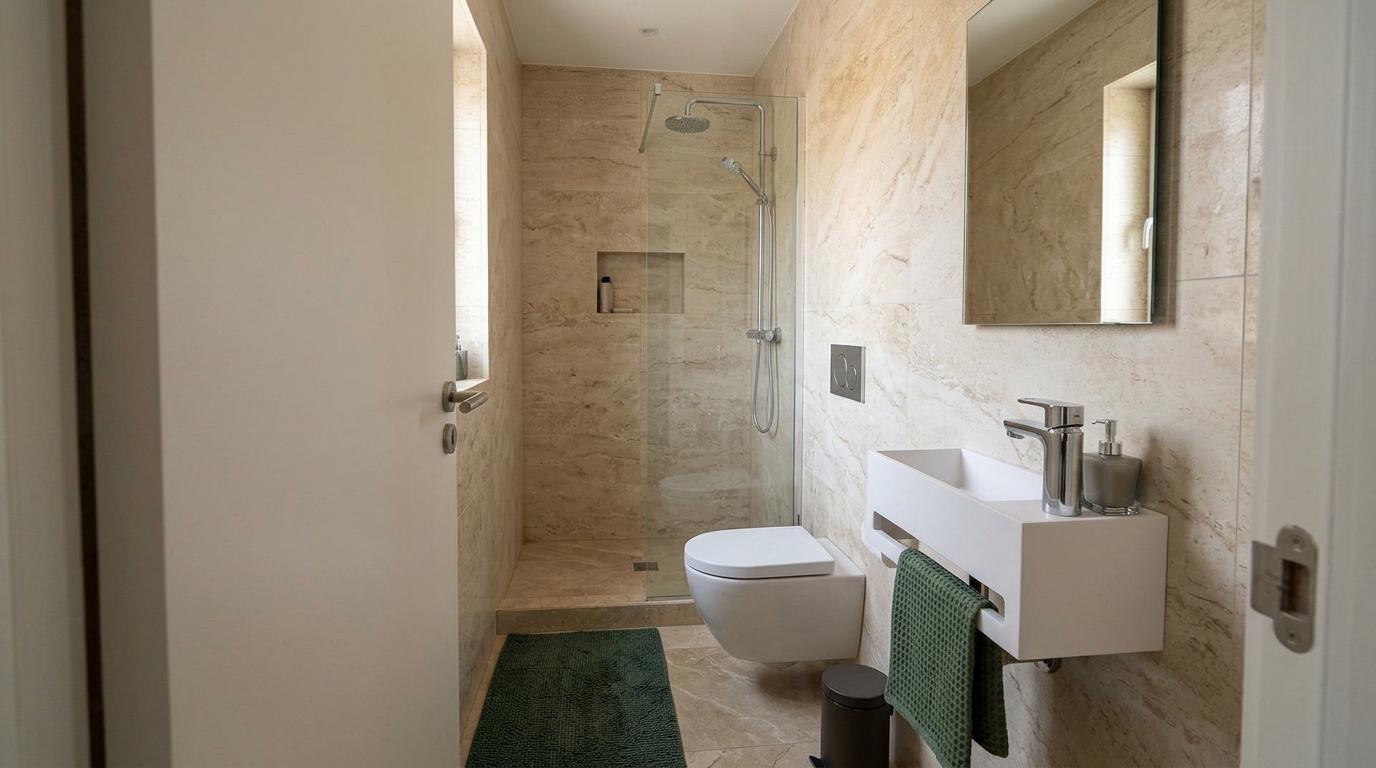
A bathroom feels cohesive when its fixtures, surfaces, and accessories appear to belong together. The basin is an important part of this relationship because it occupies a visible position and often sits beneath a mirror or lighting feature. In a compact room, its shape and finish can have an even greater influence on the overall impression. Matching it to the interior requires attention to proportion, color, texture, and practical use.
A small bathroom basin can complement many design styles, from understated contemporary rooms to warmer interiors with natural materials. The best result comes from considering the basin alongside the vanity, tapware, wall finish, and lighting rather than selecting each item independently. A consistent approach can make a small bathroom feel more deliberate and visually balanced.
Identify the interior style first
Before choosing a basin, decide which design direction the bathroom should follow. A minimalist room may use simple shapes, neutral colors, and unobtrusive fittings. A more traditional interior might include softer curves, classic metal finishes, and decorative wall details. A contemporary space may combine geometric forms with contrasting materials.
The basin should reinforce the chosen direction. A sharply rectangular model may look out of place in a room built around rounded shapes, while an ornate bowl may compete with a very restrained interior. Consider the existing features that will remain after the renovation and use them as a starting point.
Coordinate shape with surrounding lines
The basin’s outline can repeat or contrast with other shapes in the room. A rectangular bowl may complement a square mirror, linear vanity, and large-format tiles. An oval or rounded design can soften a room dominated by straight edges.
Contrast can be effective when it is intentional. For example, a round mirror above a rectangular basin introduces variation without creating visual confusion. The important point is to avoid using too many unrelated shapes in a limited area.
Build a balanced color palette
White basins are versatile because they work with many wall and floor colors. They can blend into a pale interior or stand out against darker surfaces. Other basin finishes may introduce a warmer or more distinctive effect, but they should be coordinated with the rest of the room.
Choose a small number of main colors and repeat them in selected details. A metal tap finish might be echoed in the towel ring or cabinet handles. A wood-effect vanity could relate to shelving or other furniture. Repeating materials in this way helps connect separate elements.
Use texture to add interest
A compact bathroom can feel flat if every surface has the same finish. Texture can introduce depth without requiring a complicated color scheme. A smooth basin may contrast with textured wall tiles, a wood-grain cabinet, or a stone-effect countertop.
Consider how materials will look together under the room’s lighting. Glossy surfaces reflect light, while matte finishes create a softer effect. Ask suppliers for samples where possible and compare them in the actual bathroom rather than relying only on digital images.
Match the tap and basin carefully
Tapware should complement the basin’s design and function. A simple mixer may suit a minimalist bowl, while a more distinctive finish can add character to a neutral interior. Check the tap-hole arrangement, spout height, and reach before purchasing.
A wall-mounted tap can create a clear basin deck, but its position must match the bowl and water outlet. A deck-mounted fitting should not crowd the rim or make cleaning difficult. The water stream should enter the bowl comfortably to reduce splashing.
Select a vanity and mirror that fit
A compact vanity should support the basin without overwhelming the room. Choose a cabinet depth that preserves circulation space and a finish that relates to the wider palette. A floating unit can create a lighter appearance, while a mirrored cabinet may provide useful storage.
The mirror should be proportionate to the basin and positioned for comfortable use. Its frame can repeat a metal or wood finish used elsewhere in the room.
Remember maintenance and moisture
Design choices should remain practical. Check that the basin material and surrounding surfaces are suitable for bathroom conditions. Review cleaning instructions and choose cabinetry with moisture-resistant construction and properly sealed edges.
Create a coordinated finish
Matching a basin with an interior is a process of balancing shapes, colors, textures, and fittings. When these decisions are made together, a compact bathroom can feel unified and stylish without relying on excessive decoration.