
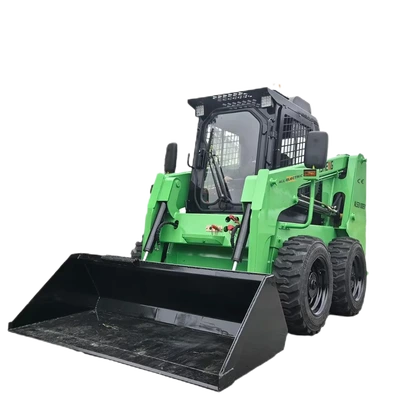
Finding an Electric Skid Steer Loaders Supplier with Reliable Spare Parts Availability
Electric skid steer loaders are widely used in construction, landscaping, agriculture, warehousing, and industrial material handling. Their compact design and electric power systems make them suitable for many applications where maneuverability, reduced operating noise, and lower local emissions are important. However, maintaining consistent equipment performance requires more than choosing a machine with suitable specifications. Access to replacement parts is equally important for minimizing downtime and controlling maintenance costs.
When evaluating an Electric Skid Steer Loaders Supplier, buyers should investigate how spare parts are stocked, ordered, shipped, and supported throughout the machine’s service life. A supplier may offer competitive prices and capable equipment, but limited parts availability can create delays when repairs are necessary. Understanding the supplier’s parts support system helps businesses make informed purchasing decisions and maintain more reliable operations.
1. Understand Why Spare Parts Availability Matters
Spare parts availability directly affects how quickly a machine can return to work after maintenance or a component failure. Even well-designed electric skid steer loaders require routine servicing and may eventually need replacement components because of normal wear, accidental damage, or technical faults.
If essential parts are unavailable, a relatively minor problem can keep the loader out of service for an extended period. This can delay projects, disrupt material handling, and increase labor costs when alternative equipment must be arranged.
Before purchasing, ask suppliers how they support customers after delivery. Find out whether they maintain an inventory of common replacement parts, order components from a central warehouse, or manufacture parts only when requested.
A clear understanding of these arrangements helps you assess whether the supplier can support your equipment throughout its expected working life.
2. Identify the Most Important Replacement Parts
Not every component has the same maintenance requirements or operational importance. Some parts need periodic replacement, while others are less frequently needed but can cause significant downtime if they fail.
For electric skid steer loaders, commonly relevant parts may include:
- Hydraulic hoses, seals, fittings, and other hydraulic components.
- Tires and other wear-related items.
- Filters and routine maintenance consumables.
- Electrical connectors, switches, sensors, and wiring components.
- Electronic controllers and other control-system components.
- Charging equipment and compatible charging accessories.
- Battery-related components, where replacement is supported by the manufacturer.
- Attachment-related parts and mounting components.
The exact parts required depend on the machine’s design, operating environment, and maintenance schedule.
Ask the supplier for a parts catalog or recommended spare parts list for the specific model you intend to purchase. This allows your maintenance team to identify essential items and estimate future service requirements.
3. Check Whether Common Parts Are Stocked
A supplier that keeps frequently required parts in stock may be able to fulfill orders faster than one that must source every component after receiving a request. However, inventory practices vary, so it is important to verify availability rather than assume that every advertised part is ready to ship.
Ask which parts are normally stocked and whether availability differs by model or machine generation. Find out if the supplier maintains local inventory, regional warehouses, or a central distribution facility.
You should also ask whether stock information can be confirmed before an order is placed. For businesses operating several machines, predictable parts availability can be especially valuable because maintenance delays may affect multiple projects or work shifts.
If a supplier does not stock certain components, request an estimated procurement and delivery timeframe. Understanding the difference between stocked items and factory-order parts helps you plan maintenance more effectively.
4. Evaluate Spare Parts Lead Times
Lead time refers to the period between placing a parts order and receiving the component. It may include order processing, warehouse handling, manufacturing, transportation, customs clearance, and final delivery.
Short lead times can help reduce equipment downtime, but the actual timeframe depends on the component and shipping destination. Common consumables may be readily available, while specialized electronic or battery-related components may require additional sourcing.
Ask suppliers for realistic delivery estimates for both routine maintenance items and critical replacement components. If your business operates in a remote location or imports equipment internationally, confirm how shipping distance and customs procedures may affect delivery.
It is also useful to ask how the supplier handles urgent orders and whether expedited shipping options are available. Although faster delivery may involve additional costs, it can be worthwhile when a machine is essential to daily operations.
5. Verify Parts Compatibility and Identification
Correct parts identification is essential when ordering replacement components. An incompatible part may not fit properly, perform as intended, or meet the machine’s technical requirements.
Ask the supplier whether parts are identified by model number, serial number, part number, or another approved identification system. Request documentation that helps your maintenance team distinguish between similar components used across different machine versions.
Before placing an order, confirm that the replacement part is compatible with the exact loader configuration. This is particularly important for electrical components, controllers, hydraulic assemblies, and battery-related equipment, where specifications can vary.
A supplier that provides clear parts diagrams, catalogs, and technical assistance can make the ordering process more efficient and reduce the risk of receiving incorrect components.
6. Assess Support for Electrical and Battery Components
Electric skid steer loaders contain electrical systems that require appropriate replacement parts and technical knowledge. Depending on the design, these may include motor controllers, sensors, wiring assemblies, electrical connectors, charging components, and battery monitoring equipment.
Ask whether the supplier can provide compatible replacement components for the specific machine model. Determine how electrical faults are diagnosed and whether the supplier offers troubleshooting guidance or access to qualified technicians.
Battery support deserves particular attention because battery systems can be expensive and may require specialized handling. Clarify whether replacement batteries or approved battery components are available, how compatibility is verified, and what warranty conditions apply.
Do not assume that individual battery cells or internal battery components can be replaced independently. The appropriate repair or replacement procedure depends on the manufacturer’s design and safety requirements.
Reliable technical support and correct parts documentation are essential for maintaining electrical system performance safely.
7. Review the Supplier’s Parts Ordering Process
An efficient ordering process can save time when a replacement component is needed. Before purchasing the machine, ask how parts orders are submitted, confirmed, paid for, and tracked.
Find out whether orders can be placed by email, through an online portal, or through an authorized distributor. Determine what information is required, such as the machine model, serial number, part number, photographs, or diagnostic report.
You should also clarify how the supplier handles incorrect shipments, damaged items, backorders, and discontinued components. Written procedures can make it easier to resolve problems without unnecessary delays.
If your business has a maintenance department, consider whether the supplier can provide a dedicated contact for parts inquiries. Consistent communication can be especially helpful when several machines require servicing.
8. Investigate Shipping, Customs, and Delivery Costs
Spare parts availability is not determined by inventory alone. Shipping arrangements and total delivery costs can also affect how practical a supplier is for your business.
For domestic purchases, review delivery fees, estimated transit times, and available courier options. For international orders, clarify shipping terms, insurance, customs documentation, import duties, taxes, and responsibility for clearing goods through customs.
Ask whether the supplier can consolidate multiple parts into one shipment when appropriate. Consolidation may reduce some transportation costs, although it may not be suitable when one component is urgently needed.
Request a complete explanation of the costs associated with common replacement orders. A supplier with a low parts price may not offer the best overall value if delivery is expensive or unpredictable.
9. Check Warranty and Returns for Replacement Parts
Replacement parts may have their own warranty conditions, which can differ from the warranty covering the complete machine. Understanding these conditions helps prevent unexpected expenses if a supplied component fails.
Ask whether new replacement parts include a warranty, how long the coverage lasts, and what types of defects are included. Clarify whether the warranty covers labor, shipping, installation, or only the replacement component itself.
You should also review the return policy. Find out what happens if a part is supplied incorrectly, arrives damaged, or proves incompatible despite accurate ordering information.
For electronic components, determine whether installation must be performed by an authorized technician to preserve warranty coverage. Keep invoices, packaging details, serial numbers, and installation records where applicable.
Clear warranty and return procedures provide additional confidence when ordering essential components.
10. Evaluate Technical Documentation and Maintenance Guidance
Parts availability is more useful when the supplier also provides the information needed to identify, install, and maintain those parts correctly.
Ask whether the supplier offers an operator manual, maintenance schedule, illustrated parts catalog, troubleshooting guide, and service documentation for the specific machine. These resources can help maintenance teams recognize components, follow recommended inspection intervals, and prepare accurate parts orders.
For complex repairs, determine whether technical support is available to explain diagnostic procedures or identify the likely source of a fault. Some repairs may require specialized tools or qualified technicians, especially when electrical systems and battery components are involved.
Clear documentation can also support inventory planning by helping your team distinguish routine consumables from components that should be ordered only when necessary.
11. Compare Local Support with International Supply
The location of a supplier’s inventory can affect delivery times and service convenience. A local distributor may provide easier communication and faster access to common components, while an international manufacturer may offer direct access to a broader range of model-specific parts.
Neither arrangement is automatically better. The most suitable option depends on the machine, the supplier’s distribution network, and the reliability of its ordering and shipping process.
When purchasing internationally, ask where parts are dispatched from, whether regional distributors are available, and how technical questions are handled. Confirm the documentation required for international shipments and whether replacement components can be delivered to your operating location.
If the supplier relies on third-party distributors, clarify which organization is responsible for stock availability, order tracking, warranty claims, and technical support.
A clear support structure can make international equipment ownership more manageable.
12. Assess Supplier Reputation and Customer Experiences
Customer feedback can provide useful information about a supplier’s ability to deliver parts consistently. Look for reviews, customer references, and case studies that discuss spare parts lead times, order accuracy, warranty handling, and technical assistance.
Where possible, speak with customers who operate similar electric skid steer loaders under comparable conditions. Ask whether replacement parts arrived within the stated timeframe, whether components matched the requested specifications, and how the supplier handled urgent maintenance needs.
Look for repeated patterns rather than relying on individual comments. Consistent reports of accurate orders and responsive communication can be encouraging, while recurring complaints about missing components or unresolved issues deserve further investigation.
You can also assess the supplier’s transparency during the purchasing process. Clear answers about inventory, lead times, and parts limitations are more useful than broad assurances that every component is readily available.
13. Plan an Essential Spare Parts Inventory
For businesses that depend on electric skid steer loaders every day, maintaining a small inventory of essential parts can reduce the impact of routine maintenance and predictable wear.
The appropriate inventory depends on the number of machines, working hours, operating environment, maintenance history, and supplier lead times. Common consumables and frequently replaced wear items may deserve priority, while expensive electronic components may be better ordered when needed unless operational risks justify keeping them in stock.
Ask the supplier for recommendations based on the machine’s maintenance schedule and your intended workload. Consider the cost of holding inventory against the potential cost of equipment downtime.
Store parts according to the manufacturer’s recommendations, especially electrical and battery-related components that may require specific environmental conditions. Maintain an organized record of part numbers, quantities, usage, and reorder points.
A planned inventory strategy can help balance availability with unnecessary storage costs.
14. Use a Spare Parts Evaluation Checklist
A structured checklist makes it easier to compare suppliers objectively. Request the same information from each supplier so that the results can be evaluated consistently.
| Evaluation factor | What to verify |
|---|---|
| Inventory availability | Which common parts are currently stocked? |
| Lead times | How long do stocked and special-order parts take to arrive? |
| Parts identification | Are catalogs, diagrams, and part numbers available? |
| Compatibility | How is compatibility with the exact machine model confirmed? |
| Electrical components | Are compatible controllers, sensors, and connectors supported? |
| Battery support | Are approved replacement batteries or components available? |
| Ordering process | How are orders submitted, confirmed, and tracked? |
| Shipping costs | What transportation, customs, and handling charges apply? |
| Warranty and returns | What coverage and return procedures apply to replacement parts? |
| Technical support | Can the supplier help identify parts and troubleshoot problems? |
| Customer reputation | Can the supplier provide verifiable references? |
Use the checklist alongside the machine’s specifications and warranty terms. A supplier with clear documentation, realistic delivery estimates, and a dependable ordering process may be a stronger long-term choice than one offering only a lower initial price.
Common Spare Parts Mistakes to Avoid
When assessing spare parts support, buyers should avoid several common mistakes:
- Assuming every part is in stock: Confirm availability for the specific model and component.
- Ignoring lead times: A low-priced part may still cause costly downtime if delivery is delayed.
- Ordering without verifying compatibility: Match part numbers and specifications to the exact machine.
- Overlooking international shipping costs: Include freight, customs charges, and handling fees in your calculations.
- Ignoring parts warranty conditions: Understand coverage for defects, returns, and installation-related exclusions.
- Failing to plan for routine maintenance: Identify consumables and wear parts before they are urgently needed.
- Relying on unsupported promises: Request written confirmation of stock status, delivery estimates, and service arrangements.
Addressing these issues before purchasing can help businesses reduce avoidable delays and improve equipment maintenance planning.
Conclusion
Finding an electric skid steer loader supplier with reliable spare parts availability is an important step toward maintaining productivity and controlling long-term ownership costs. Buyers should evaluate inventory practices, delivery lead times, parts compatibility, ordering procedures, electrical and battery support, and replacement-part warranty conditions.
Shipping arrangements, technical documentation, customer feedback, and local service options also deserve careful consideration. For businesses that rely heavily on their equipment, planning an appropriate inventory of essential parts can further reduce the impact of routine maintenance and unexpected repairs.
By comparing suppliers against consistent criteria and confirming important details in writing, businesses can choose equipment backed by practical parts support. Reliable access to compatible replacement components helps make maintenance more predictable and supports the long-term performance of electric skid steer loaders.


