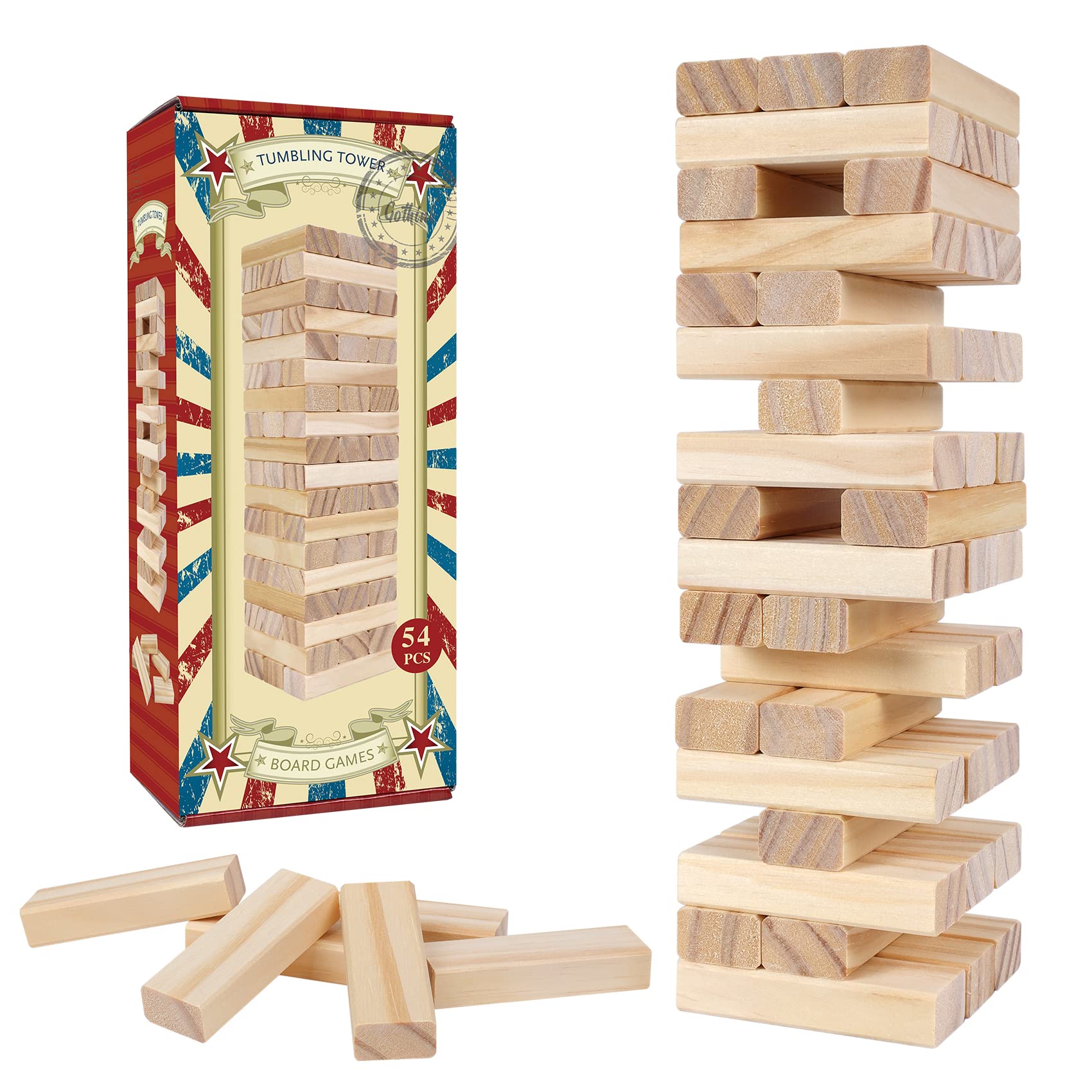
Wooden stacking games have remained popular because they combine simple materials, exciting challenges, and entertainment for players of different ages. They are easy to introduce at family gatherings, parties, classrooms, and social events. Among these activities, the tumbling tower game stands out for its suspenseful gameplay, where every move can change the balance of the structure.
Tumbling Tower is a popular wooden stacking game in which players take turns removing individual blocks from a tower and placing them on top without causing the structure to collapse. The objective is to keep the tower standing for as long as possible while making careful decisions about which blocks to move. Its straightforward rules and unpredictable results make it an enjoyable activity for children, teenagers, and adults.
What Is a Tumbling Tower Game?
A tumbling tower game is a tabletop activity made up of rectangular wooden blocks arranged into a tall structure. Players take turns removing blocks from the lower or middle sections and placing them on the top.
As the game continues, the tower becomes increasingly unstable. Each successful move changes the balance and creates a new challenge for the next player.
The game is often associated with Jenga-style stacking activities, although different sets may have their own rules, block dimensions, and playing variations. It can be enjoyed casually or used as part of organized group competitions.
Essential Equipment for Playing Tumbling Tower
A standard tumbling tower set usually contains wooden blocks and may include additional accessories for storage or organized play.
1. Wooden Blocks
The blocks are the main components of the game. A traditional set commonly contains 54 rectangular wooden pieces, although the number can vary depending on the product.
The blocks are arranged in layers, with three pieces placed side by side in each layer. The direction of each layer alternates to create a stable starting tower.
Good-quality blocks should have consistent dimensions and smooth surfaces. Uniform sizing helps the structure remain balanced and makes it easier for players to remove individual pieces.
2. Playing Surface
A stable, level surface is essential. A table, floor mat, or other firm area can provide a suitable foundation.
Avoid soft or uneven surfaces that may cause the tower to tilt before the game begins.
3. Storage Bag or Box
A carrying bag or storage box helps keep the blocks together when the game is not being used. It also makes transportation more convenient for parties, picnics, and family outings.
4. Score Sheet
A score sheet is optional but useful for competitive variations. Players can record how many successful moves they make or how long the tower remains standing.
How to Set Up a Tumbling Tower Game
Correct setup helps create a balanced structure and gives everyone a fair starting position.
Step 1: Check the Wooden Blocks
Before building the tower, check that the blocks are clean, dry, and free from noticeable damage. Remove any pieces with splinters or sharp edges.
Step 2: Build the Starting Tower
Arrange three wooden blocks side by side to create the first layer. Place the next three blocks across the previous layer, turning their direction by 90 degrees.
Continue alternating the direction of each layer until all blocks have been used or the desired tower height has been reached.
Step 3: Choose the Playing Order
Players can determine who starts through a coin toss, a random selection, or another agreed method.
The game then proceeds clockwise or in another consistent order.
Step 4: Prepare the Playing Area
Place the tower on a flat surface where everyone can reach it comfortably. Leave enough room around the structure so players can make moves without accidentally knocking it over.
Tumbling Tower Rules Explained
The rules are simple, but understanding the basic restrictions helps keep the game fair and enjoyable.
Rule 1: Take Turns Removing Blocks
Each player takes one turn at a time. During a turn, the player carefully removes one block from the tower and places it on the top.
Players should avoid making sudden movements that could disturb the structure.
Rule 2: Choose a Suitable Block
In many standard versions, players may remove blocks from any completed layer below the highest completed layer. The top layer must remain undisturbed while players continue building above it.
Some sets use slightly different rules, so participants should agree on the permitted block positions before starting.
Rule 3: Use One Hand at a Time
A common rule is that players must use only one hand when touching or moving the blocks. This makes the game more challenging and prevents players from supporting the tower with both hands.
Players may generally test blocks gently to identify which pieces are loose, provided they follow the agreed rules.
Rule 4: Place the Removed Block on Top
After removing a block, the player must place it on the highest layer of the tower. The new layer should follow the alternating arrangement used during setup.
The structure gradually becomes taller and less stable as the game continues.
Rule 5: Complete Your Turn Carefully
A turn is usually considered complete once the player has placed the block on top and the tower remains standing. Some groups agree that players must wait a few seconds before the next person begins.
Rule 6: Determine the Loser and Winner
The player who causes the tower to collapse usually loses the game. The last player to complete a successful move before the collapse is generally considered the winner.
Understanding the Strategy Behind Tumbling Tower
Although the game looks simple, successful play involves observation, patience, and careful decision-making.
Look for Loose Blocks
Some blocks may slide out more easily than others. Gently testing a few options can help players identify a suitable piece without disturbing the tower.
Consider the Tower’s Balance
Removing a block changes the distribution of weight. Before choosing a piece, examine how the remaining blocks support the layers above it.
Avoid Weakening One Section
Removing too many blocks from the same area may make the tower unstable. Spread-out support can help maintain balance for longer.
Think About the Next Move
A good move should not only be easy to complete but should also leave the tower in a condition that allows future turns. Planning ahead can make a significant difference.
Place Blocks Carefully
The way a block is positioned on top affects the tower’s balance. Align each piece properly and avoid placing it in a way that creates unnecessary movement.
Tips for Playing Tumbling Tower Successfully
Players can improve their performance by practicing a few simple techniques.
Use Gentle Movements
Avoid pulling blocks quickly or applying excessive force. Slow, controlled movements reduce the chance of disturbing nearby pieces.
Test More Than One Option
Before choosing a block, gently check a few possible pieces. A block that moves easily may be a safer choice than one that appears tightly supported.
Keep Your Hands Steady
A steady hand helps prevent accidental contact with neighboring blocks. Take your time, especially when the tower becomes tall.
Watch the Structure From Different Angles
Looking at the tower from different sides can reveal loose blocks and areas where the structure is becoming unstable.
Stay Patient
Rushing can lead to mistakes. Give yourself time to assess the tower and make a careful move.
Practice With Different Tower Configurations
Playing several rounds helps participants understand how different block arrangements affect stability. Experience also makes it easier to recognize safer moves.
Benefits of Playing Tumbling Tower
Tumbling tower games provide more than entertainment. They offer opportunities to practice several useful skills through hands-on play.
1. Improves Hand-Eye Coordination
Players must carefully position their hands, observe individual blocks, and control their movements. Repeated play can encourage better coordination between visual judgment and physical action.
2. Develops Fine Motor Skills
Removing and placing small wooden blocks requires controlled finger movements. This can provide useful practice for children developing fine motor coordination.
3. Encourages Logical Thinking
Players need to assess the tower’s structure and decide which block is most suitable to remove. These decisions encourage observation and logical reasoning.
4. Supports Problem-Solving Skills
Every move creates a new structural challenge. Players must adapt to changing conditions and find ways to keep the tower standing.
5. Builds Patience and Concentration
The game rewards careful attention and controlled movements. Players learn to focus on the task rather than rushing to complete their turn.
6. Encourages Social Interaction
Tumbling tower is easy to play in groups, making it suitable for family gatherings, classroom activities, and parties. Taking turns creates opportunities for conversation and friendly competition.
7. Provides Screen-Free Entertainment
The game offers a hands-on alternative to digital entertainment. It encourages players to interact directly with each other while enjoying a shared activity.
8. Promotes Confidence
Successfully completing a difficult move can give players a sense of achievement. Gradually improving their technique may also encourage confidence and willingness to try new challenges.
Tumbling Tower Activities for Children and Adults
One of the game’s strengths is its flexibility. The rules and difficulty can be adjusted to suit different age groups and experience levels.
For Young Children
Younger children can begin with shorter towers and fewer blocks. Adults should supervise play and make sure the pieces are suitable for the children’s age.
Simple activities, such as building a tower together or removing blocks with assistance, can introduce basic concepts of balance and coordination.
For School-Age Children
Older children can play using standard rules or participate in small group challenges. Teachers can also use the blocks for activities involving counting, patterns, and basic problem-solving.
For Teenagers
Teenagers may enjoy competitive rounds, timed challenges, or variations that require additional planning. These formats can make the game more engaging during social events.
For Adults
Adults can enjoy the game as a casual party activity or as part of a more structured competition. Its simple setup makes it suitable for both small gatherings and larger events.
For Mixed-Age Groups
Families can adapt the rules to make participation easier for beginners. For example, younger players can use a shorter tower or receive extra time to complete their moves.
Popular Variations of Tumbling Tower
Different playing formats can add variety and make repeated games more interesting.
Timed Tumbling Tower
Players must complete their move within a set time. This variation introduces additional pressure and encourages quick decision-making.
Numbered Block Challenge
If the blocks are numbered, players can use dice or another random selection method to decide which piece they must remove. This adds an extra element of unpredictability.
Team Tumbling Tower
Players form teams and take turns making moves together. Teammates can discuss possible options before deciding which block to remove.
Question or Task Tower
Some groups write questions, instructions, or simple challenges on individual blocks. When a player removes a marked piece, they complete the associated activity.
This variation is particularly popular at parties and social gatherings. Keep tasks suitable for the participants and the event.
Speed Stacking Challenge
Instead of playing until the tower collapses, participants compete to build a tower as quickly as possible. This version focuses more on construction speed and coordination than on traditional removal rules.
How to Choose a Quality Wooden Tumbling Tower Set
Selecting the right set can improve the playing experience and help the equipment last longer.
Wood Quality
Look for blocks made from sturdy, properly finished wood. The material should feel solid and suitable for repeated handling.
Consistent Block Dimensions
Uniform block sizes help create a balanced tower. Pieces that are noticeably different in length, width, or thickness may make gameplay unpredictable.
Smooth Surface Finish
Blocks should have smooth surfaces without sharp edges or splinters. This is particularly important when children will use the game.
Accurate Cutting
Well-cut blocks are easier to stack and remove. Consistent shapes also help the tower remain stable during the early stages of play.
Number of Blocks
Check the number of pieces included in the set. A traditional tower commonly uses 54 blocks, but some products offer different quantities or larger formats.
Storage and Portability
A wooden box, carrying case, or storage bag can make the set easier to transport and organize. This is useful for people who plan to take the game to parties or outdoor gatherings.
Suitable Design for the Intended Players
Smaller sets may be convenient for travel and younger players, while larger blocks can create a more noticeable challenge for group entertainment. Consider the age and experience of the intended users before choosing.
Caring for and Maintaining a Wooden Tumbling Tower
Proper care helps preserve the appearance and condition of wooden blocks.
- Keep the blocks in a dry place when not in use.
- Wipe away dust and dirt with a soft, dry or slightly damp cloth.
- Allow any damp pieces to dry completely before storage.
- Avoid prolonged exposure to direct sunlight or moisture.
- Store all blocks together in a suitable container.
- Inspect pieces regularly for cracks, splinters, or damage.
- Follow the manufacturer’s recommendations for cleaning and maintenance.
Avoid using harsh cleaning products unless they are specifically recommended for the material and finish.
Best Occasions for Playing Tumbling Tower
The game is suitable for many social and recreational settings because it requires little preparation and can be played by small or large groups.
Family Game Nights
Tumbling tower can be included in family game nights as a simple activity that brings different generations together. Short rounds allow everyone to participate.
Birthday Parties
The unpredictable nature of the game creates excitement during birthday celebrations. Players can compete individually or in teams.
School Activities
Teachers can introduce the game during supervised recreation sessions. It can also support lessons involving balance, shapes, counting, and problem-solving.
Office and Team-Building Events
The game can provide a relaxed activity during workplace gatherings. Team formats encourage communication and shared decision-making.
Picnics and Outdoor Gatherings
A portable set can be taken to suitable outdoor locations. Players should choose a stable surface and avoid windy or uneven areas that could affect the tower.
Tumbling Tower Compared With Other Wooden Games
Tumbling tower belongs to a wider group of traditional wooden games that combine physical interaction with simple rules. However, its focus on balance and controlled removal gives it a distinctive style.
| Feature | Tumbling Tower | Other wooden games |
|---|---|---|
| Main equipment | Rectangular wooden blocks | Varies by game |
| Main objective | Remove and stack blocks without collapsing the tower | Varies by activity |
| Key skills | Balance, coordination, and problem-solving | Depends on the game |
| Playing format | Usually turn-based group play | Individual or group play |
| Physical activity | Fine motor movements | Varies by activity |
| Main challenge | Maintaining structural stability | Depends on the rules |
For people who enjoy hands-on activities, tumbling tower offers a simple but engaging challenge that can be repeated in many different ways.
Organizing a Tumbling Tower Competition
A friendly competition can make the game more exciting at parties, schools, and community events.
Start by choosing a flat playing surface and building a tower with all the required blocks. Decide the playing order and confirm the rules, including whether players may test multiple blocks and how long they have to complete each move.
For larger groups, consider using several sets so that participants can play in smaller teams. Organizers can record the winning player from each round and arrange a final match.
Make sure spectators remain at a safe distance and that players do not reach across the tower while someone else is taking a turn. After a collapse, collect the blocks and rebuild the tower before beginning the next game.
Conclusion
Tumbling Tower is a popular wooden stacking game that combines entertainment, coordination, patience, and problem-solving. Its simple rules make it accessible to beginners, while its changing structure provides a challenge that keeps experienced players interested.
Choosing a quality set involves checking the wood, block dimensions, surface finish, construction, and storage options. Regular care can also help preserve the pieces and support long-term use.
Whether played during family game nights, school activities, parties, or team-building events, tumbling tower offers an enjoyable way to bring people together. With a suitable set and a little practice, every round can create a new challenge and a memorable playing experience.