

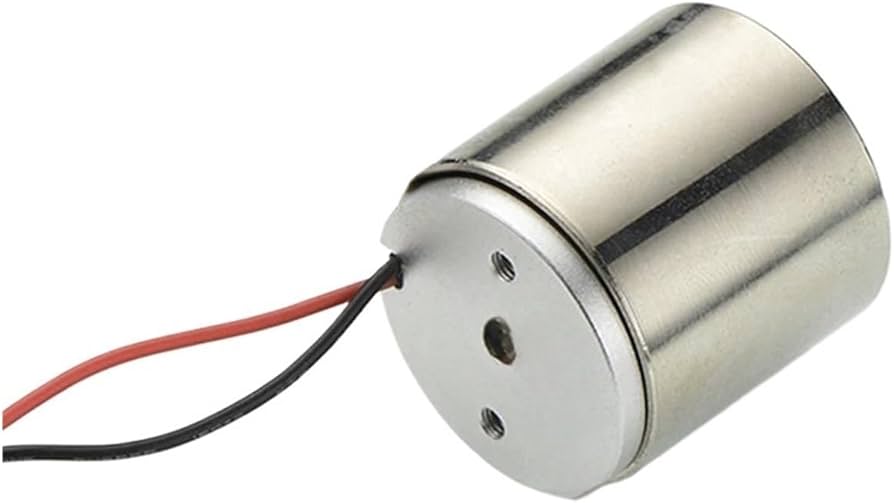
Modern motion systems increasingly rely on compact, fast, and precise actuation technologies to meet the demands of automation, medical devices, and advanced manufacturing. Among these technologies, linear actuators that use electromagnetic principles stand out for their responsiveness and simplicity of design. They are especially valued in applications where rapid movement and fine positioning are required without the mechanical complexity of traditional systems.
A voice coil actuator is a type of direct-drive linear motor that generates motion through the interaction of a magnetic field and a current-carrying coil. Unlike rotary-to-linear conversion systems, it produces motion directly along a straight path, reducing friction and mechanical wear. This allows for extremely fast response times, smooth motion profiles, and highly accurate positioning, making it suitable for precision engineering tasks where reliability and speed are critical.
Table of Contents
ToggleHow a Voice Coil Actuator Works
The operating principle of a voice coil actuator is based on Lorentz force. When electric current passes through a coil placed within a permanent magnetic field, a force is generated perpendicular to both the magnetic field and the current direction. This force drives the linear motion of the actuator’s moving element.
Because the system has very few moving parts, it avoids the backlash and mechanical losses commonly found in gear-driven systems. The direction of motion is controlled simply by reversing the polarity of the current, allowing smooth bidirectional movement.
Key components typically include:
- A permanent magnet assembly that creates a stable magnetic field
- A copper coil that carries electrical current
- A non-contact bearing or flexure guiding system for linear motion
This simple architecture enables high acceleration and deceleration rates, which is why voice coil actuators are widely used in high-speed positioning systems.
High-Speed Performance and Precision Benefits
One of the defining advantages of voice coil technology is its ability to achieve extremely fast dynamic response. Since the actuator has no brushes, gears, or rotating shafts, inertia is significantly reduced. This results in rapid acceleration and near-instant reaction to control signals.
Precision is another key strength. Motion control systems using voice coils can achieve micron-level or even sub-micron positioning accuracy when paired with feedback sensors. This makes them ideal for tasks requiring controlled force and displacement.
Additional benefits include:
- Smooth, continuous motion without cogging
- High repeatability in cyclic operations
- Low maintenance requirements due to minimal wear components
- Quiet operation compared to mechanical alternatives
These characteristics make them especially valuable in environments where stability and precision are more important than long stroke lengths.
Common Applications in Industry
Voice coil actuators are used across a wide range of industries that demand fast, accurate linear movement. Their versatility allows them to be integrated into both small-scale precision instruments and larger industrial systems.
Typical applications include:
- Semiconductor manufacturing equipment for wafer positioning
- Medical devices such as surgical tools and imaging systems
- Optical alignment systems in cameras and laser devices
- Automated testing and inspection equipment
- Robotics requiring fast and precise micro-adjustments
In these environments, the ability to respond quickly while maintaining controlled force output is essential for performance and safety.
Design Considerations and Limitations
While voice coil actuators offer many advantages, their design must be carefully matched to application requirements. One important factor is stroke length, which is typically shorter than that of screw-driven linear systems. This is because the force generated depends on the magnetic field interaction range.
Thermal management is another consideration. Continuous high-current operation can generate heat in the coil, so proper cooling or duty cycle control is often necessary to maintain performance and longevity.
Engineers also evaluate:
- Force requirements versus coil size
- Power consumption efficiency
- Feedback system integration for closed-loop control
- Environmental conditions such as temperature and vibration
When properly specified, these actuators provide a highly efficient solution for precision motion tasks.
Conclusion
Voice coil technology represents a powerful approach to achieving high-speed, high-precision linear motion with minimal mechanical complexity. Its direct-drive design enables rapid response, smooth operation, and exceptional accuracy across a wide range of demanding applications. As automation and precision engineering continue to evolve, the role of compact and efficient motion systems like the voice coil actuator is expected to grow even further in advanced industrial and scientific fields.